
Opening the Circle
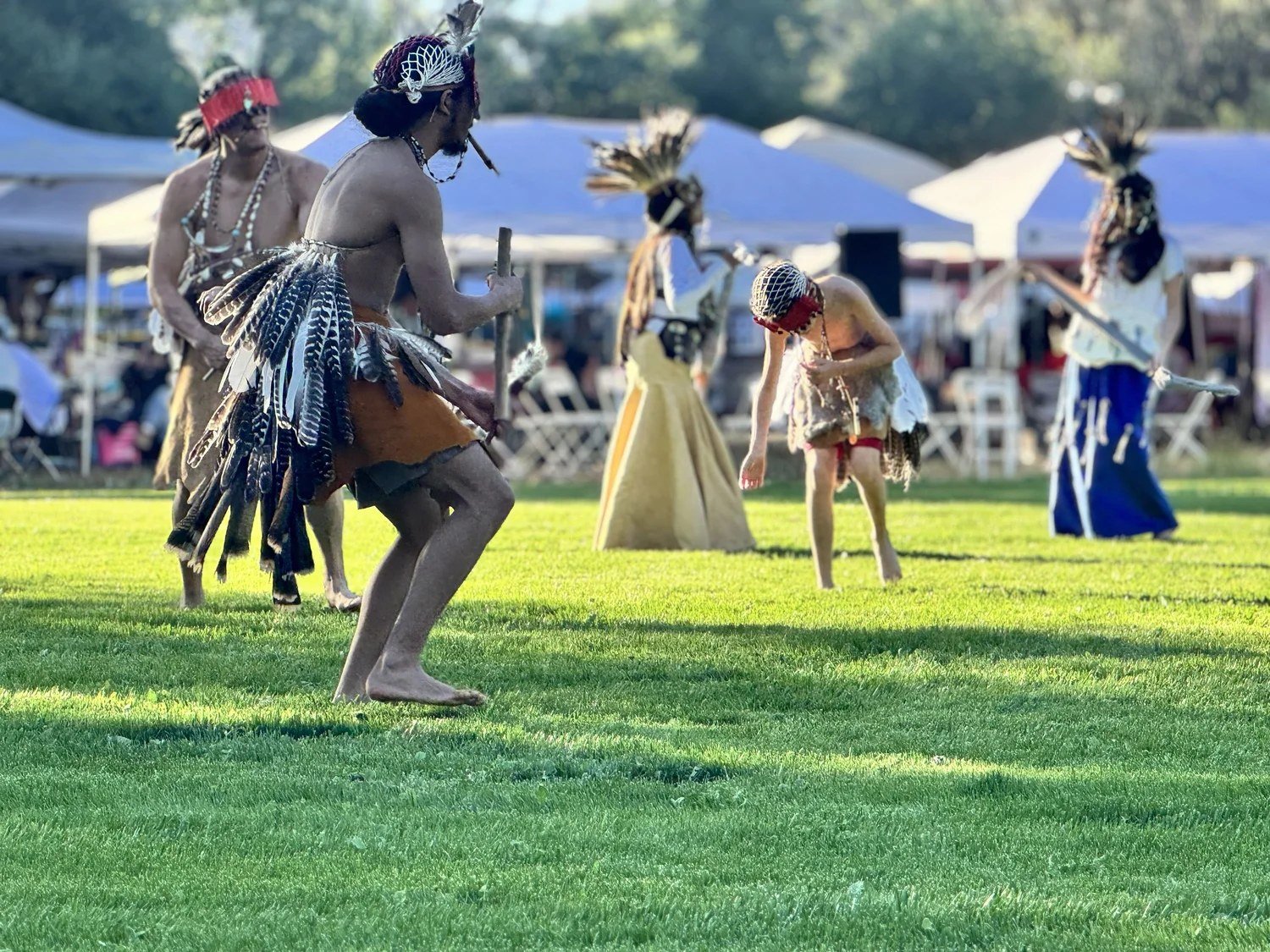
A ceremony at the Stanford Powwow, from the Foundation’s photo gallery. Photo: Muwekma Ohlone Preservation Foundation
In one week last May, Muwekma Ohlone leaders took the stage at Stanford’s business school to talk about returning land to Indigenous stewards, and Muwekma dancers opened the ceremony space at the 55th Stanford Powwow. The two events shared a theme: the hosts were home.
Stanford University sits on the ancestral land of the Muwekma Ohlone, and for much of its history that fact went unspoken. In the first week of May 2026, it got a week.
Monday: The Business School
The Knight Management Center is all stone and glass, home to a school better known for venture capital than for acorns. On May 4 and 5, the Stanford Graduate School of Business hosted a conference called “Indigenous Stewardship for Sustainability” as part of its Sustainability Research Conference Series. The school’s description was direct. The conference would gather scholars and practitioners “to address the impacts, challenges, and opportunities of land stewardship and land return to local Indigenous communities,” and to discuss how tribally led stewardship and the return of land “can generate benefits for all.”
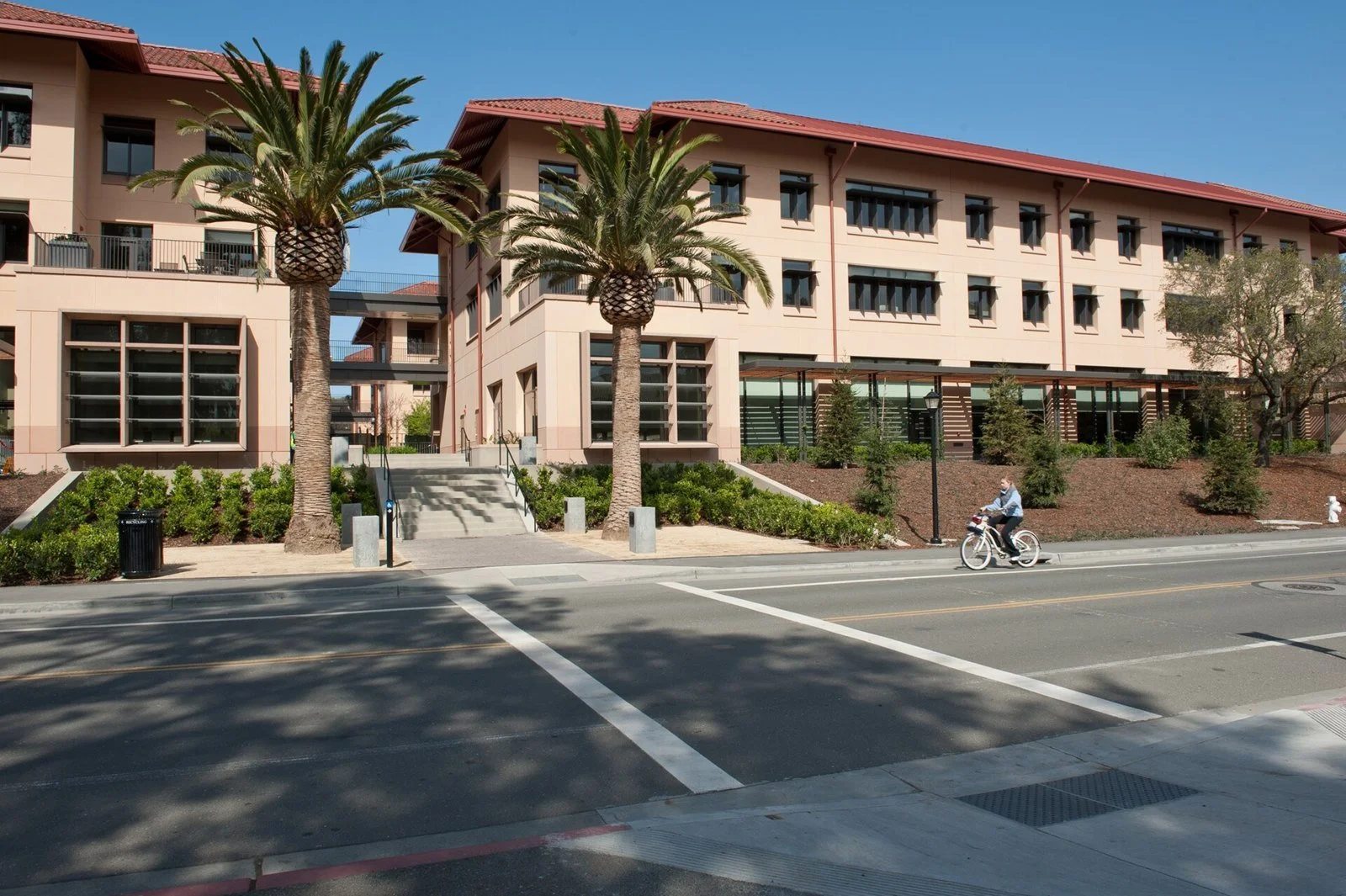
The Knight Management Center, home of the Stanford Graduate School of Business, where the Indigenous Stewardship for Sustainability conference met May 4–5, 2026. Photo: Steve Castillo / Wikimedia Commons, CC BY 3.0
The speaker list stretched across the world. It included Māori researchers from the University of Auckland and the University of Waikato in Aotearoa New Zealand, Verónica Figueroa Huencho of the University of Chile, the Diné and Cheyenne musician and scholar Lyla June Johnston, Cutcha Risling Baldy of Cal Poly Humboldt, and Melissa Nelson of Arizona State. Arun Majumdar, dean of Stanford’s Doerr School of Sustainability, was there too. So were neighbors from closer to home: Alec Apodaca and Esak Ordoñez of the Amah Mutsun Land Trust, and Tadashi Fukami, faculty director of Stanford’s Jasper Ridge Biological Preserve, where the Muwekma lit a cultural burn in January.
Representing the people whose land the conference was meeting on were two Muwekma Ohlone speakers: Chairwoman Charlene Nijmeh and Joseph “Joey” Iyolopixtli Torres, the Tribe’s culture bearer.
Afterward, the preserve that had hosted the burn summed up the spring in a sentence: “Momentum and partnership are growing at Stanford University for Indigenous stewardship.” That month the GSB also posted a recorded conversation about the conference’s takeaways. In it, professor William P. Barnett and student Milian Chen talked with Fukami and the doctoral student Raven Longwolf Alcott.
Friday: The Grove
Four days later, the conversation moved outdoors to the Eucalyptus Grove.
The Stanford Powwow is 55 years old. The Stanford Daily calls it the largest student-run powwow in the country. Every second weekend in May it draws thousands of people: students, Bay Area Native families, and dancers and drum groups from across the country who come to compete. This year, organizers told the Daily, the Powwow raised about $60,000 in donations for prize money and drew a record number of dancers and drummers.
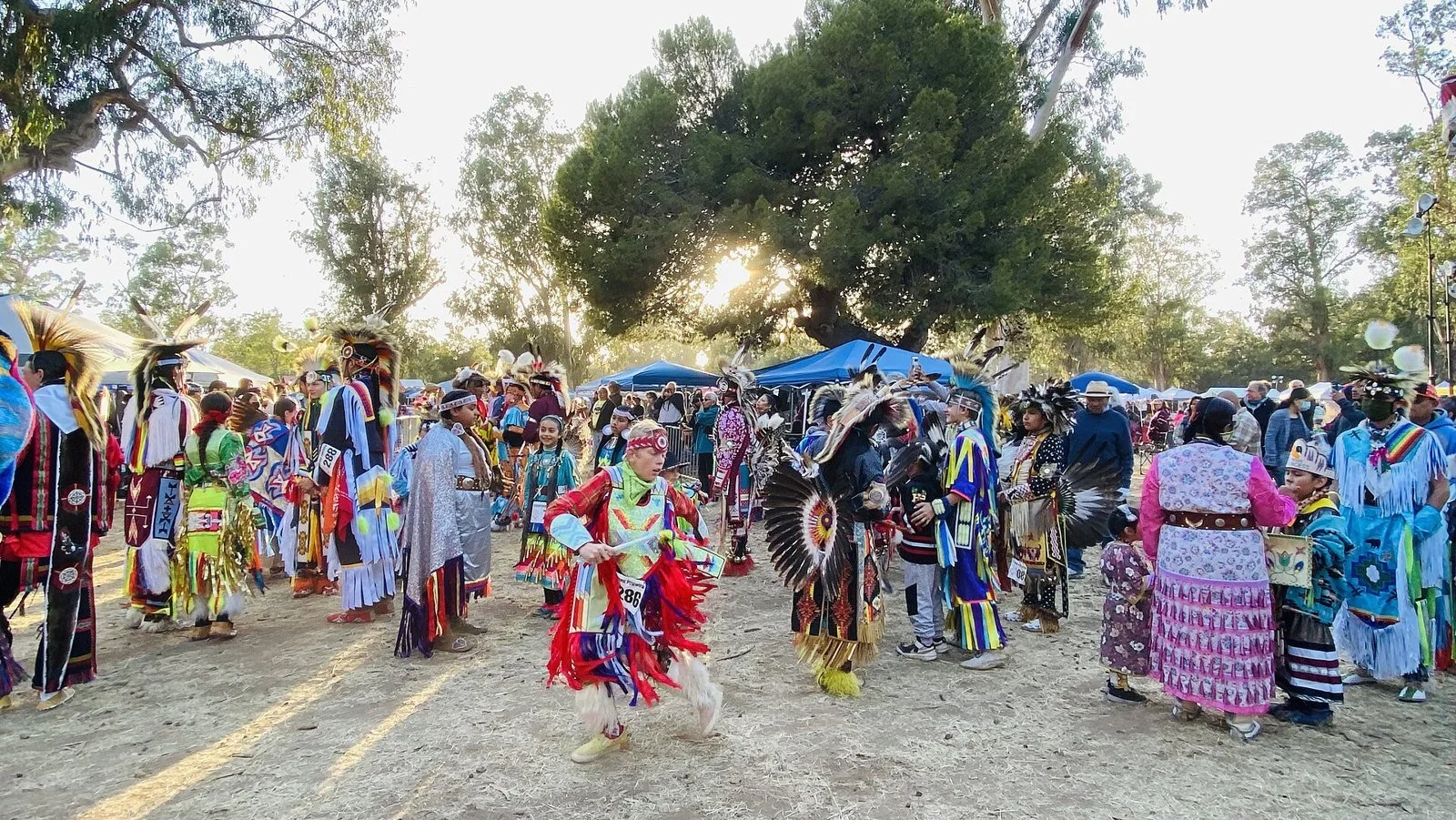
Dancers fill the arena at the Stanford Powwow in 2022. The 55th Powwow returned to the Eucalyptus Grove May 8–10, 2026. Photo: Suiren2022 / Wikimedia Commons, CC BY-SA 4.0
Before any of that could begin, the ground had to be opened. The Powwow’s 2026 schedule listed a special performance by the Muwekma Ohlone Tribe of the San Francisco Bay Area at 5 p.m. on Friday, May 8, two hours before the first grand entry.
In a post afterward, the Tribe explained what that meant. “This year’s Stanford Powwow was especially meaningful for the Muwekma Ohlone Tribe,” it wrote. “As the Indigenous people of these homelands, opening the ceremony space was a powerful reminder of our enduring presence and our responsibility to carry our traditions forward.”
“As the Indigenous people of these homelands, opening the ceremony space was a powerful reminder of our enduring presence and our responsibility to carry our traditions forward.” —Muwekma Ohlone Tribe
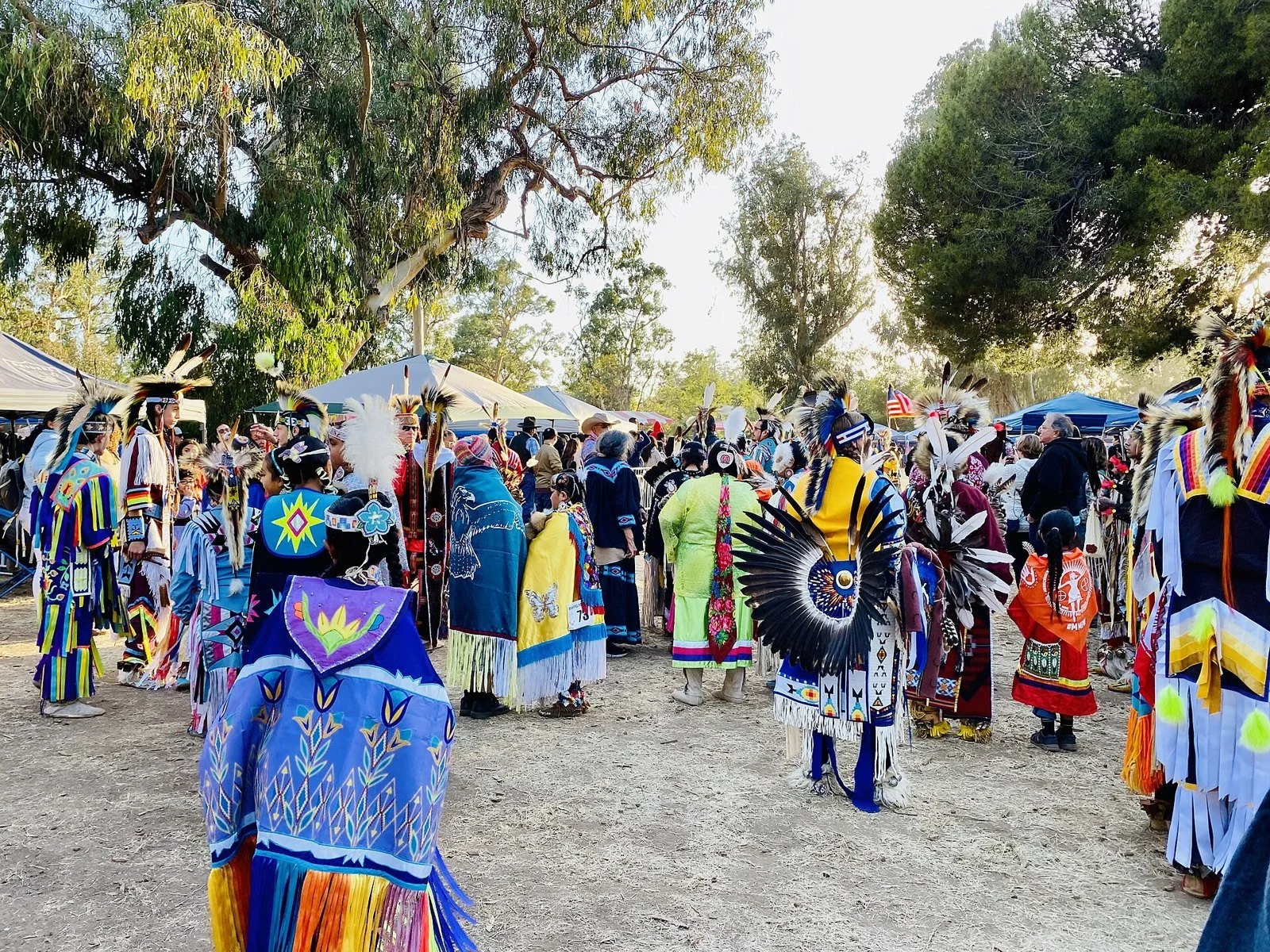
Afternoon light in the arena at the Stanford Powwow, 2022. Photo: Suiren2022 / Wikimedia Commons, CC BY-SA 4.0
The Dancers
Over the summer, the Tribe introduced some of the young people behind that opening.
For Katelynn Torres, the Tribe wrote, the Stanford Powwow “has been a part of life for as long as she can remember. What began as childhood memories of attending the gathering has grown into the honor of helping open it alongside her dance family.” The Tribe called her path “the heart of cultural continuity where each generation first learns, then participates, and eventually carries traditions forward for those who will follow.”
Josiah Dominguez, another young dancer, talked about what it was like “to stand with his dance family, pray together, and welcome the community on Muwekma ancestral homelands,” as the Tribe put it in an Aug. 16 post.
Welcome is the right word. Many of the dancers and drummers in the arena that weekend had traveled from across the country, some from the Midwest, where much of the powwow circuit is. Native people from across the continent have also made the Bay Area home, and the Stanford Powwow is one of the places where that intertribal community gathers. Before the drums started, the original people of the place welcomed them.
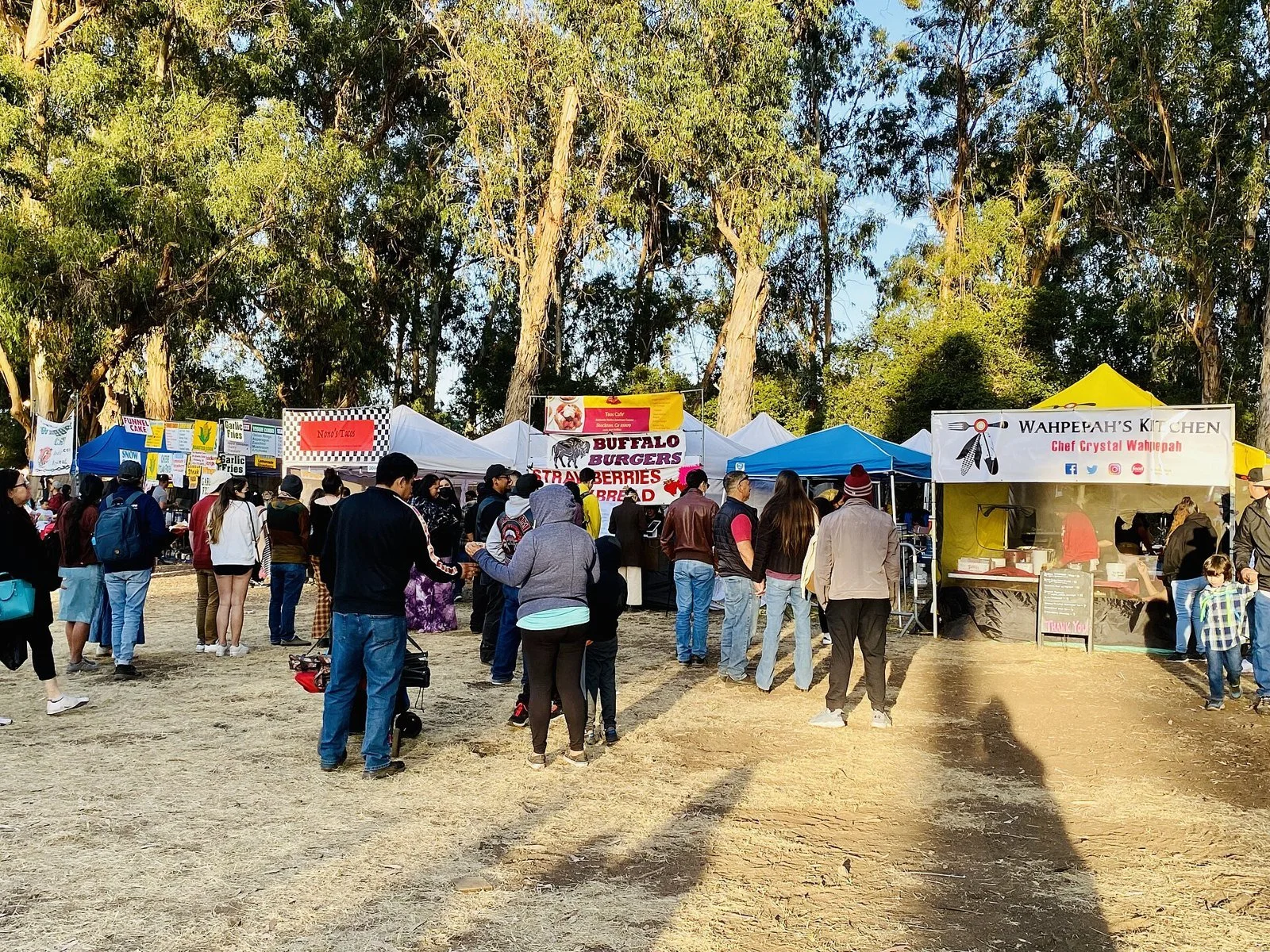
The Eucalyptus Grove at dusk during the Stanford Powwow, 2022. Photo: Suiren2022 / Wikimedia Commons, CC BY-SA 4.0
Two Kinds of Presence
It would be easy to treat the two events as separate worlds, one a conference about land policy, the other a celebration. They belong together. The conference was about who should care for the land. The Powwow was a reminder of whose land it has always been. In the Tribe’s words, the weekend “reflected the strength of Native communities and the importance of creating spaces where culture continues to thrive.”
The university’s president seems to be paying attention. The Daily reported that Jonathan Levin ran the Powwow’s 5K Fun Run this year. Six months earlier, he had sent a message of recognition to Chairwoman Nijmeh’s lecture at Jasper Ridge.
The Tribe thanked “everyone who joined us in celebrating, learning, and standing alongside us.” We add our thanks to the student organizers of the Stanford Powwow and to the GSB’s conference team. Next May, the grove will be ready again.
Editor’s note: Quotations attributed to the Tribe come from its posts of July 22, Aug. 14 and Aug. 16, 2026. Powwow facts come from the Stanford Powwow schedule and The Stanford Daily (May 18, 2026); conference details come from the Stanford GSB event page. The 2022 Powwow photographs are from Wikimedia Commons and do not show the 2026 event. Charlene Nijmeh is president of the Muwekma Ohlone Preservation Foundation, which publishes this newsletter, and Joseph Torres is its Director of Cultural Programs.