
Laura Jones
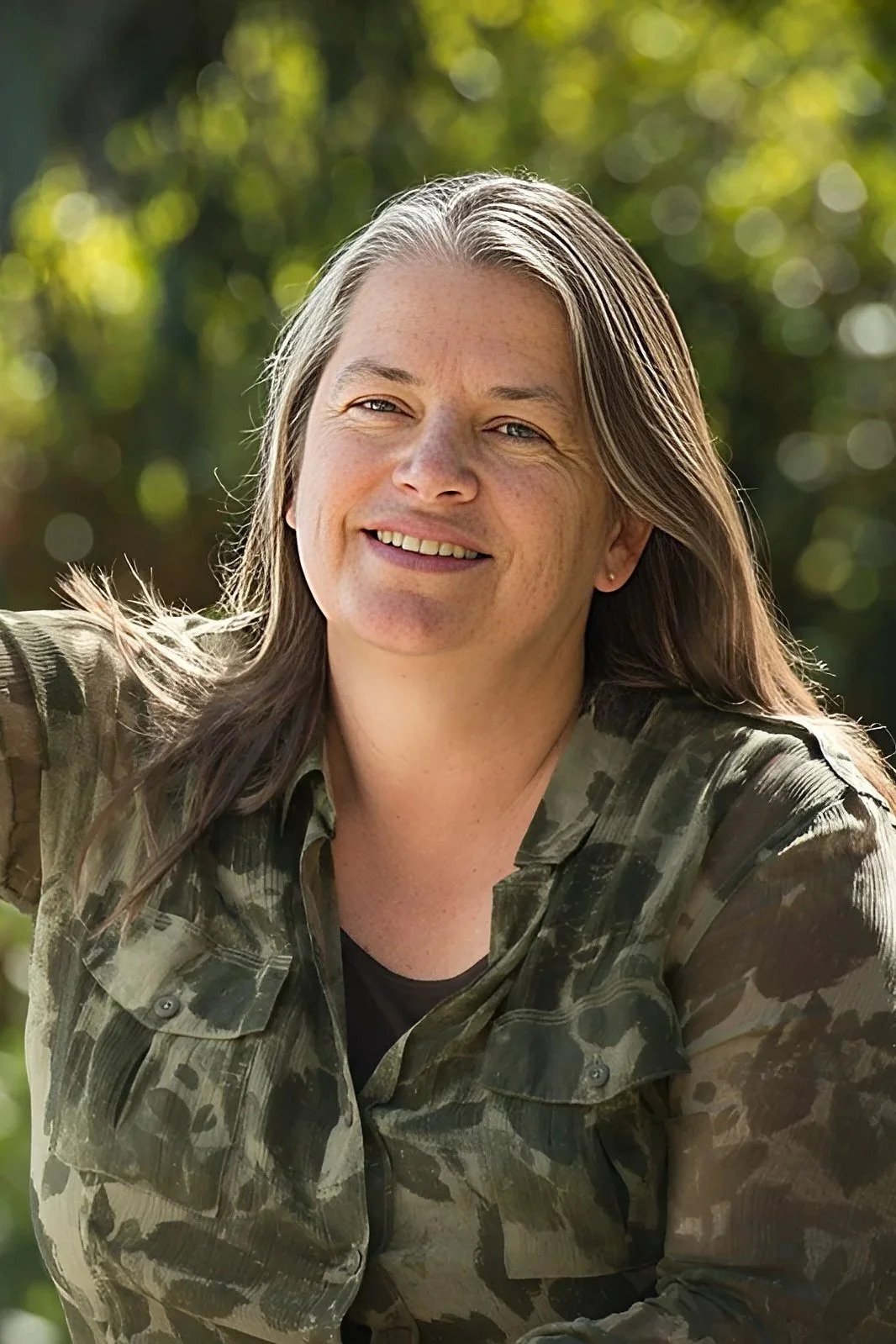
Photo: L.A. Cicero / Stanford University
Director of Heritage Services and University Archaeologist, Stanford University
Stanford University’s relationship with the Muwekma Ohlone Tribe began with difficult conversations in the 1980s about the ancestral remains held in the university’s museum. It has since grown into one of the Tribe’s most important institutional partnerships. Laura Jones has been part of that story from its beginning.
Background
Jones is Stanford’s Director of Heritage Services and University Archaeologist, responsible for the stewardship of nearly 100 archaeological sites and 200 historic buildings. She earned a B.A. at the University of California, San Diego (1983) and an M.A. and Ph.D. in anthropology from Stanford. Her doctorate, in cultural anthropology, was based on ethnographic work with traditional women artists in French Polynesia. As a graduate student she also worked in the university museum and on campus archaeology projects, which is how she came to know the Muwekma Ohlone Tribe. From 2001 to 2006 she was Senior Scholar and Director of Community Programs at the Carnegie Foundation for the Advancement of Teaching. She co-authored The Formation of Scholars, a major study of doctoral education.
Research Focus
Her archaeological work in the Bay Area has centered on precontact village and cemetery sites, with a focus on burial practices and subsistence among complex hunter-gatherers. She also leads historical archaeology on campus, including the excavation of the Men’s Gymnasium ruin left by the 1906 earthquake, work at the Arboretum Chinese Labor Quarters, and a student survey of Asian American heritage sites. Her team practices community-based archaeology, rooted in collaboration with descendant communities. In her words, archaeology is “as much about living communities as it is about the past.”
With the Muwekma Ohlone Tribe
As a graduate student, Jones was involved in Stanford’s return of ancestral remains and funerary objects to the Ohlone in the late 1980s. The decision came before the federal repatriation law of 1990, drew national attention, and set an important precedent. One recent account puts the number of ancestors returned at about 700. They were reburied at Coyote Hills Regional Park in the East Bay, and Jones has recalled renting the truck and driving them to the reburial site herself.
She has said her role in the repatriation closed doors at the museums where she had hoped to work. Instead, after finishing her degree in 1990, she was hired by the Tribe to help with the salvage excavation and reburial of ancestral cemeteries threatened by development. She later recalled that in three years they moved more than 400 ancestors. That period included the 1992 work at Kaphan Húunikma (the Three Wolves Site) in San José and test excavations at the mound later renamed Yukisma (CA-SCL-38) in Milpitas. She co-authored reports on both with Rosemary Cambra, Alan Leventhal, and others.
Jones returned to Stanford in 1994, believing that sacred sites are best protected when they are identified early in the planning process. Since then she has brought tribal members to work alongside Stanford students in the field. As Director of Heritage Services she oversees the university’s compliance with federal repatriation law. She staffed the committees whose work led Stanford to rename landmarks honoring Junípero Serra in 2019. With curator Christina Hodge, and with contributions from Chairwoman Charlene Nijmeh and Vice Chairwoman Monica Arellano, she wrote “First Inhabitants: The Ohlone of the Peninsula” for the Cantor Arts Center. Most recently, her office has begun an initiative on Indigenous land stewardship practices in partnership with the Tribe.
Selected Publications
Cambra, Rosemary, Alan Leventhal, Laura Jones, Julia Hammett, Les Field, and Norma Sanchez. 1996. Archaeological Investigations at Kaphan Umux (Three Wolves) Site, CA-SCL-732: A Middle Period Prehistoric Cemetery on Coyote Creek in Southern San Jose, Santa Clara County, California. Report to the Santa Clara County Traffic Authority and California Department of Transportation, District 4.
Hammett, Julia, Alan Leventhal, Laura Jones, Susanne Rodriguez, Rosemary Cambra, Norma Sanchez, and Ann Chalfant. 1997 (updated 2015). The Story of the Archaeology at Kaphan Húunikma, the Three Wolves Site (CA-SCL-732). Muwekma Ohlone Tribe of the San Francisco Bay Area / Ohlone Families Consulting Services.
Leventhal, Alan, Laura Jones, Rosemary Cambra, and Norma Sanchez. 1993. Results from a Presence/Absence Subsurface Archaeological Test Excavation Program on a Portion of Prehistoric Site CA-SCL-38 (Alms House Mound), Elmwood Correctional Facility, City of Milpitas, Santa Clara County, California. Report to the County of Santa Clara.
Hodge, Christina J., and Laura Jones, with contributions by Charlene Nijmeh and Monica Arellano. 2019. “First Inhabitants: The Ohlone of the Peninsula.” Essay for The Melancholy Museum: Love, Death, and Mourning at Stanford. Stanford, CA: Cantor Arts Center.
Walker, George E., Chris M. Golde, Laura Jones, Andrea Conklin Bueschel, and Pat Hutchings. 2008. The Formation of Scholars: Rethinking Doctoral Education for the Twenty-First Century. San Francisco: Jossey-Bass.