
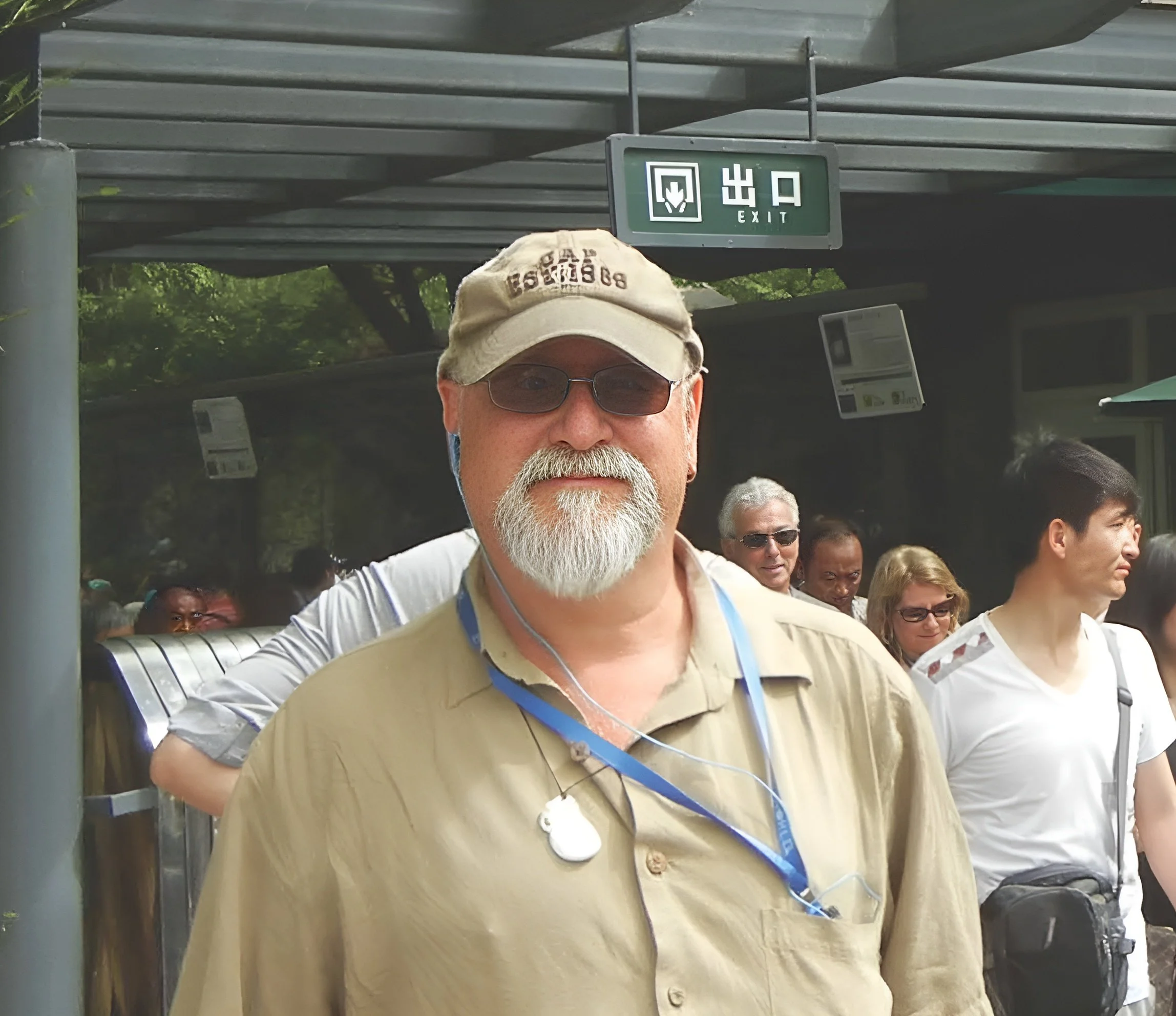
Alan Leventhal: a lifetime of service to the Ohlone People
Alan Leventhal is a pioneering archaeologist, anthropologist, and ethnohistorian whose career illuminates the enduring legacy of California's Indigenous peoples, especially the Muwekma Ohlone Tribe of the San Francisco Bay Area. Born in New York City, he earned his B.A. in Anthropology from City College of New York and had worked as state archaeologist with the Nevada Archaeological Survey at the University of Nevada, Reno. In 1978, Alan was hired by the Department of Anthropology at San Jose State University (SJSU) as the Anthropology Lab Director and taught various anthropology and Native American classes as an adjunct lecturer. After working in the Anthropology Department for nine years, he moved over to the Dean’s Office in the College of Social Sciences. He completed his Master's thesis on Bay Area shellmounds, analyzing mortuary complex at the site CA-ALA-329 which the Muwekma Tribe renamed Mánni Muwékma Kúksú Hóowok Yatiš Túnnešte-tka which means Place Where the People of the Kúksú (Bighead) Pendants are Buried Site.
As one of founding faculty members of the Native American Students Organization in 1980, Alan is a veteran of the 500 Mile American Indian Spiritual Run(1980-1984). He continued to teach in the Anthropology department up until his retirement in 2019. Now an Emeritus Lecturer, he continues to work with the Anthropology Department faculty and students on various studies and Muwekma museum-related projects.
Leventhal's partnership with the Muwekma Ohlone began in 1980 with former Tribal Chairwoman Rosemary Cambra, leading to the mid-1980s founding of Ohlone Family Consulting Services (OFCS)—California's first tribally owned cultural resource management firm. As a founding Archaeologist, he collaborated with Cambra to involve tribal elders and youth in fieldwork on their ancestral heritage sites, merging science with Indigenous knowledge to safeguard and preserve their traditions and understanding of their past lifeways. Over 46 years as senior staff archaeologist and ethnohistorian, he traced genealogies via mission records and conducted tribal interviews, debunking Alfred Kroeber's 1925 claim of “Ohlone Extinction.” His collaborative work reveals legal histories like the tribe's 1906 federal recognition as the historic Verona Band, their attendance at Indian boarding school, and their military service history spanning from pre-World War I to the present.
With SJSU students, Leventhal has spearheaded ancient DNA genomic analyses, repatriations, and excavations at sites including at the 3rd Mission Santa Clara Neophyte Cemetery (1781–1818) and at several Sunol ancestral heritage cemeteries. A prolific author and collaboration with the Muwekma Tribal leadership on their documented 12,000-year Bay Area 12,000 precontact history, he had worked with the Congressionally Created (HR-2144) Advisory Council on California Indian Policy’s Recognition Task Force (1992-1997). Alan has also collaborated with the Amah-Mutsun Tribal Band of Mission San Juan Bautista and Ohlone-Costanoan/Esselen Nation from the Monterey Bay Area. Leventhal's community-led engagement helps fosters healing and visibility for Ohlone continuity.