
Michael V. Wilcox
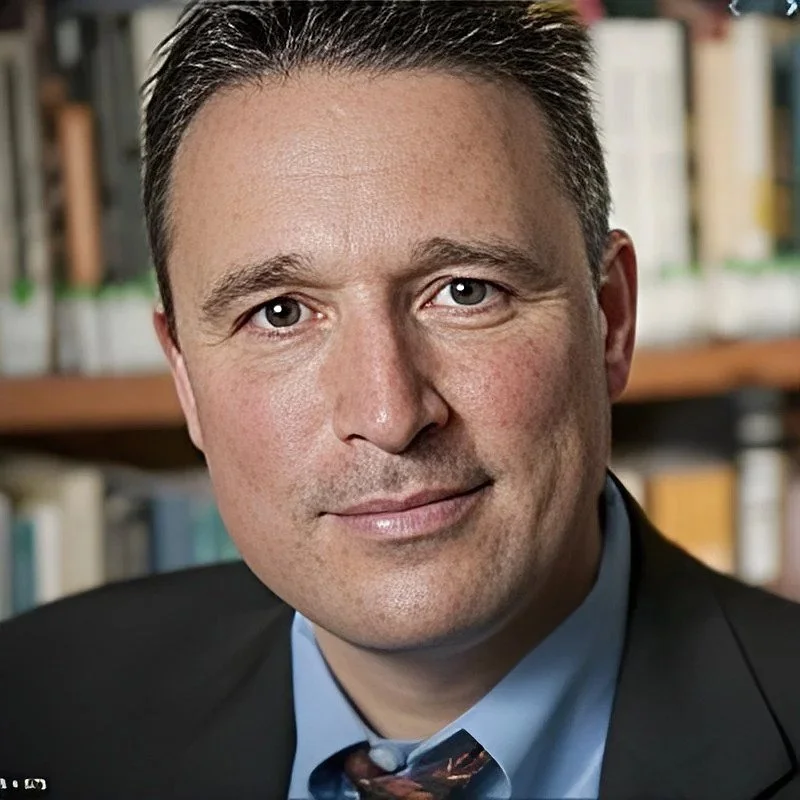
Photo: Stanford University
Senior Lecturer in Native American Studies, Center for Comparative Studies in Race and Ethnicity, Stanford University
Michael V. Wilcox has spent his career challenging one of the most stubborn stories in American history: that Native peoples were conquered, faded away, and survive only as remnants. As an Indigenous scholar, and as Tribal Historic Preservation Officer for the Muwekma Ohlone Tribe, he has taken that challenge home to the San Francisco Bay Area.
Background
Wilcox, an Indigenous scholar of Yuman descent, is Senior Lecturer in Native American Studies in Stanford University’s Center for Comparative Studies in Race and Ethnicity (CSRE). He received his doctorate in anthropology and archaeology from Harvard University in 2001. At Harvard he was instrumental in founding the Harvard University Native American Program. He joined Stanford’s faculty in 2001 and was an assistant and then associate professor of anthropology before taking his current position. He leads research from the Stanford Indigenous Archaeology Lab in the Archaeology Center. He also founded the Coalition of Indigenous Archaeologists, chaired Stanford’s Repatriation Committee (2007–2013), and received CSRE’s award for outstanding teaching in 2020.
Research Focus
His book The Pueblo Revolt and the Mythology of Conquest: An Indigenous Archaeology of Contact (2009) uses the 1680 revolt of the Pueblo peoples of New Mexico to take apart narratives of Native disappearance and passive acculturation, putting Indigenous agency, mobility, and resistance in their place. He co-edited Rethinking Colonial Pasts through Archaeology (2014). He has also written pointed critiques of how archaeology and popular science portray Native peoples, including a response to Jared Diamond’s Guns, Germs, and Steel and Collapse, and an essay on how NAGPRA transformed American archaeology. His community-based work also includes Native Hawaiian agriculture and aquaculture in Hāmākua.
With the Muwekma Ohlone Tribe
Wilcox serves as the Tribe’s Tribal Historic Preservation Officer and is a founding board member of the Muwekma Ohlone Cultural Preservation Land Trust. Since 2012 he has directed the Muwekma Ohlone Historic Research Project. He also co-founded the Bay Area Cultural Landscape Research Group, which brings together Muwekma Ohlone community members, the Midpeninsula Regional Open Space District, California State Parks, and several universities. The group studies the foothills of the Santa Cruz Mountains, long overlooked in favor of the missions.
His research draws on more than 600 previously untranslated documents from the Pueblo of San José and on several years of survey and excavation in the mountains. It documents rebellions within the missions and shows how Native people used the Bay Area foothills for escape, refuge, and later employment, reversing the image of Bay Area Natives as marginal or vanished. Wilcox has written that he hopes this research will help local tribes gain public, and possibly federal, recognition. A monograph, Claiming Home, Reclaiming History, is in preparation.
At Stanford he teaches “Muwekma: Landscape Archaeology and the Narratives of California Natives.” He also established a native plant garden on campus that serves both as a learning space for students and as a test plot for the Tribe’s revival of landscape stewardship. There, students and tribal partners have removed invasive species and planted sages, manzanita, wild rose, and thimbleberry, all well documented in the region’s archaeological and ethnographic record. With Lee Panich, Monica V. Arellano, and others, he co-authored two 2024 articles on putting archaeology and archival research to work for the Tribe.
Selected Publications
Panich, Lee M., Monica V. Arellano, Michael Wilcox, Gustavo Flores, and Samuel Connell. 2024. “Fighting Erasure and Dispossession in the San Francisco Bay Area: Putting Archaeology to Work for the Muwekma Ohlone Tribe.” Frontiers in Environmental Archaeology 3: 1394106.
Panich, Lee M., Gustavo Flores, Michael Wilcox, and Monica V. Arellano. 2024. “Reading Colonial Transitions: Archival Evidence and the Archaeology of Indigenous Action in Nineteenth-Century California.” American Antiquity 89(3): 495–511.
Wilcox, Michael V. 2009. The Pueblo Revolt and the Mythology of Conquest: An Indigenous Archaeology of Contact. Berkeley: University of California Press.
Ferris, Neal, Rodney Harrison, and Michael V. Wilcox, eds. 2014. Rethinking Colonial Pasts through Archaeology. Oxford: Oxford University Press.
Wilcox, Michael. 2010. “Saving Indigenous Peoples from Ourselves: Separate but Equal Archaeology Is Not Scientific Archaeology.” American Antiquity 75(2): 221–227.
Wilcox, Michael. 2010. “Marketing Conquest and the Vanishing Indian: An Indigenous Response to Jared Diamond’s Guns, Germs, and Steel and Collapse.” Journal of Social Archaeology 10(1): 92–117.
Wilcox, Michael. 2010. “NAGPRA and Indigenous Peoples: The Social Context, Controversies, and the Transformation of American Archaeology.” In Voices in American Archaeology, edited by Wendy Ashmore, Dorothy Lippert, and Barbara J. Mills. Washington, DC: Society for American Archaeology Press.