
Les W. Field
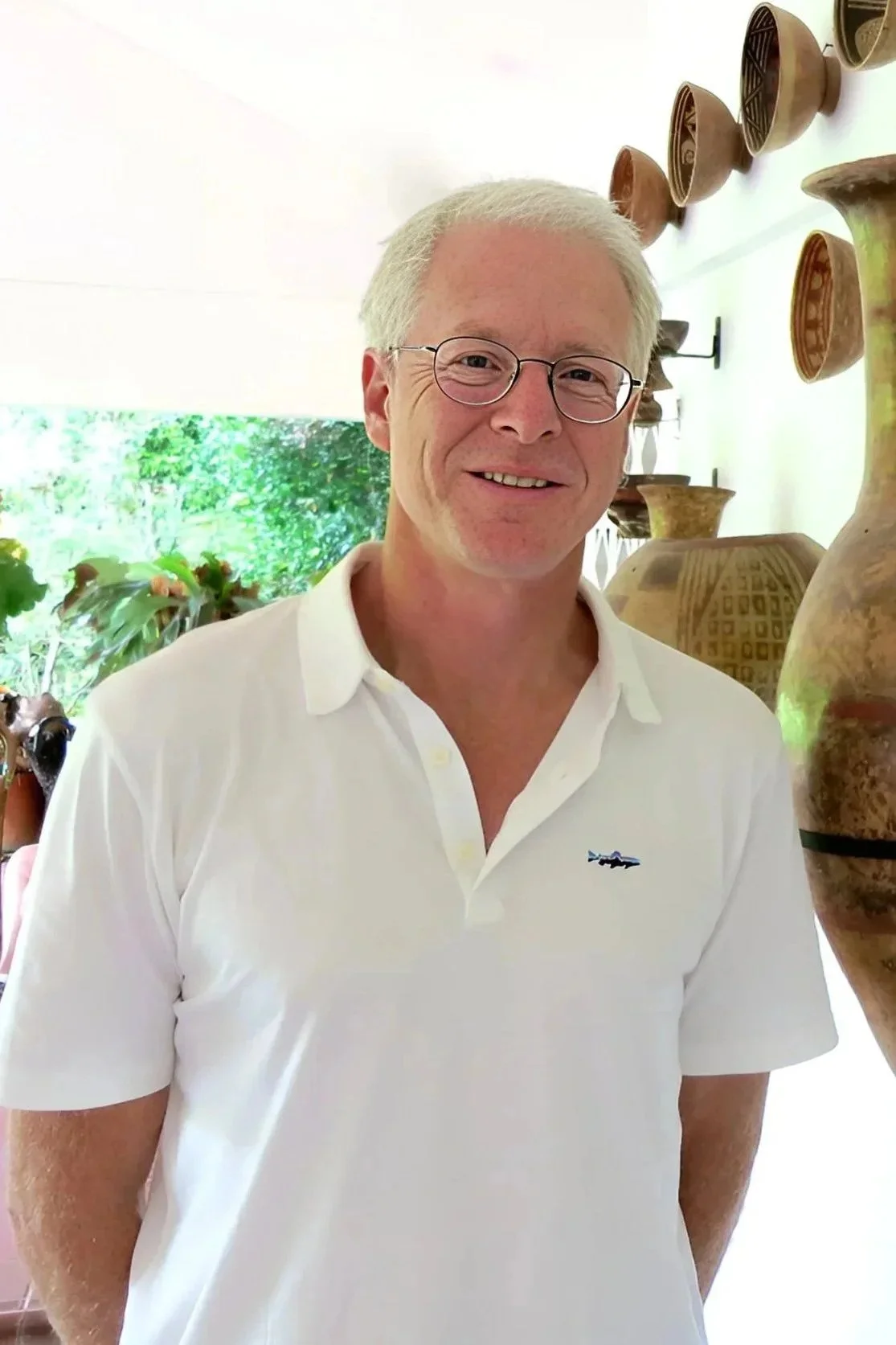
Professor of Anthropology, University of New Mexico
Few scholars have confronted anthropology’s role in the Muwekma Ohlone story as directly as Les W. Field. Early in the twentieth century, Alfred Kroeber, the leading authority on California Indians, wrote that the Ohlone were “extinct, so far as all practical purposes are concerned,” and the federal government soon stopped dealing with the Tribe. For more than three decades Field has turned the tools of his discipline in the other direction. He has used anthropology to document the Tribe’s continuity and to support its petition for federal acknowledgment.
Background
Field is Professor of Anthropology at the University of New Mexico, where he has taught since 1994. He earned his B.A. at Johns Hopkins University (1979) and his Ph.D. at Duke University (1987). In 1991 he was a visiting assistant professor of history at San José State University. That same year he began serving as tribal ethnohistorian for the Muwekma Ohlone Tribe, a role his curriculum vitae lists as ongoing.
Research Focus
A sociocultural anthropologist, Field studies Indigenous identities, nationalism and the state, and collaborative research methods. His fieldwork has taken him to Nicaragua, Colombia, Palestine, and Native California. His first book, The Grimace of Macho Ratón (1999), examined artisans and national identity in western Nicaragua. He has also co-edited volumes on applied anthropology and on the boundary between the “licit” and “illicit” in archaeology and heritage.
With the Muwekma Ohlone Tribe
Field’s work with the Tribe has taken many forms. With Alan Leventhal, Rosemary Cambra, and other tribal members, he co-authored foundational essays on the Tribe’s revitalization. The first was a 1992 article in California History, followed by “The Ohlone: Back from Extinction” in Lowell John Bean’s 1994 volume The Ohlone Past and Present. He co-authored the Muwekma petition for federal acknowledgment, which was submitted at a White House meeting in January 1995. In 1992 he also worked in the field at Kaphan Húunikma, the Three Wolves Site, an ancestral cemetery in south San José where Muwekma tribal members excavated and reburied their own ancestors. He is a co-author of the resulting report.
In a series of influential articles, Field traced how California’s “unacknowledged tribes” came to be, connecting anthropological pronouncements of extinction to the bureaucratic decisions that followed. “Complicities and Collaborations” (Current Anthropology, 1999) and “Unacknowledged Tribes, Dangerous Knowledge” (Wicazo Sa Review, 2003) argue that anthropology must reckon with its part in that history and can also help repair it. With Leventhal he wrote a study of precontact Ohlone cosmology (2003). With Leventhal and Cambra he wrote “Mapping Erasure” (2013), which shows how names on maps have helped make the Muwekma invisible.
His 2008 book Abalone Tales was written collaboratively with Native contributors, including Rosemary Cambra. Its opening chapter considers the old abalone necklaces and the possibility of a Muwekma Ohlone cultural patrimony, linking material heritage to the fight for recognition. In that book Field describes developing his research for unacknowledged tribes “in close conjunction with, and often under the direct supervision and guidance of, tribal councils and chairs.” That partnership has shaped his scholarship ever since.
Selected Publications
Field, Les, Alan Leventhal, Dolores Sanchez, and Rosemary Cambra. 1992. “A Contemporary Ohlone Tribal Revitalization Movement: A Perspective from the Muwekma Costanoan/Ohlone Indians of the San Francisco Bay Area.” California History 71(3): 412–431.
Leventhal, Alan, Les Field, Hank Alvarez, and Rosemary Cambra. 1994. “The Ohlone: Back from Extinction.” In The Ohlone Past and Present: Native Americans of the San Francisco Bay Region, edited by Lowell John Bean, 297–336. Menlo Park, CA: Ballena Press.
Field, Les W. 1999. “Complicities and Collaborations: Anthropologists and the ‘Unacknowledged Tribes’ of California.” Current Anthropology 40(2): 193–210.
Field, Les W. 2003. “Unacknowledged Tribes, Dangerous Knowledge: The Muwekma Ohlone and How Indian Identities Are ‘Known.’” Wicazo Sa Review 18(2): 79–94.
Field, Les W., and Alan Leventhal. 2003. “‘What Must It Have Been Like!’: Critical Considerations of Precontact Ohlone Cosmology as Interpreted through Central California Ethnohistory.” Wicazo Sa Review 18(2): 95–126.
Field, Les W., with Cheryl Seidner, Julian Lang, Rosemary Cambra, et al. 2008. Abalone Tales: Collaborative Explorations of Sovereignty and Identity in Native California. Durham, NC: Duke University Press.
Field, Les W., with Alan Leventhal and Rosemary Cambra. 2013. “Mapping Erasure: The Power of Nominative Cartography in the Past and Present of the Muwekma Ohlones of the San Francisco Bay Area.” In Recognition, Sovereignty Struggles, and Indigenous Rights in the United States: A Sourcebook, edited by Amy E. Den Ouden and Jean M. O’Brien, 287–310. Chapel Hill: University of North Carolina Press.
Field, Les W. 1999. The Grimace of Macho Ratón: Artisans, Identity, and Nation in Late-Twentieth-Century Western Nicaragua. Durham, NC: Duke University Press.