
Gathering Together at Dawn
Before sunrise on Indigenous Peoples’ Day, Muwekma dancers and singers gathered in front of the Mission Church at Santa Clara University. The day, ÓTTÓY RÓOTE HUŠÍŠTAK, opened the mission’s 250th-anniversary year by starting with the time before the mission.
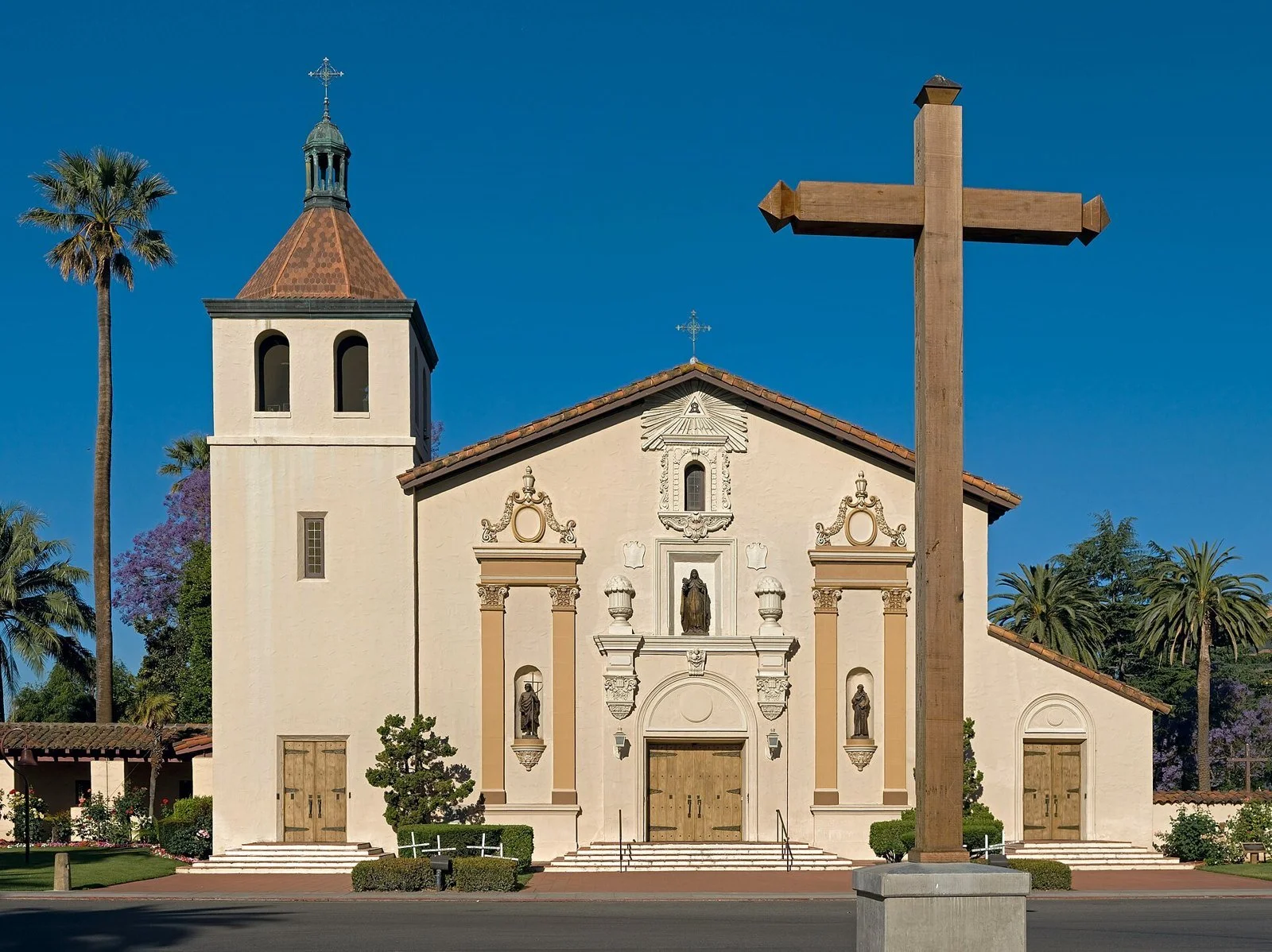
The Mission Church at Santa Clara University. The Sacred Dawn Circle gathered in front of it before sunrise on Oct. 12, 2026. Photo: JaGa / Wikimedia Commons, CC BY-SA 3.0
Sunrise on Monday, Oct. 12, 2026, was due at 7:12 a.m., over the Diablo Range. The program called for the circle to begin gathering in front of the Mission Church at Santa Clara University at 6:30, well before first light.
The university called the day ÓTTÓY RÓOTE HUŠÍŠTAK, “Gathering Together at Dawn,” and organized it in partnership with the Muwekma Ohlone Tribe of the San Francisco Bay Area. The schedule opened with a Sacred Dawn Circle of ceremonial prayers, dances and songs around the sunrise. The setting was not a neutral backdrop. According to The Santa Clara, the student newspaper, nearly 7,500 Native Californians are buried beneath Mission Santa Clara.
Two Hundred Fifty Years, Starting Before the Beginning
The date carried extra weight this year. Mission Santa Clara de Asís was founded in January 1777, and the university announced that Indigenous Peoples’ Day 2026 would serve as “the kickoff to the 250th Anniversary of Mission Santa Clara de Asis.” It added that the period from Indigenous Peoples’ Day to Jan. 12, 2027, “will have a specific focus on the Pre-mission period.”
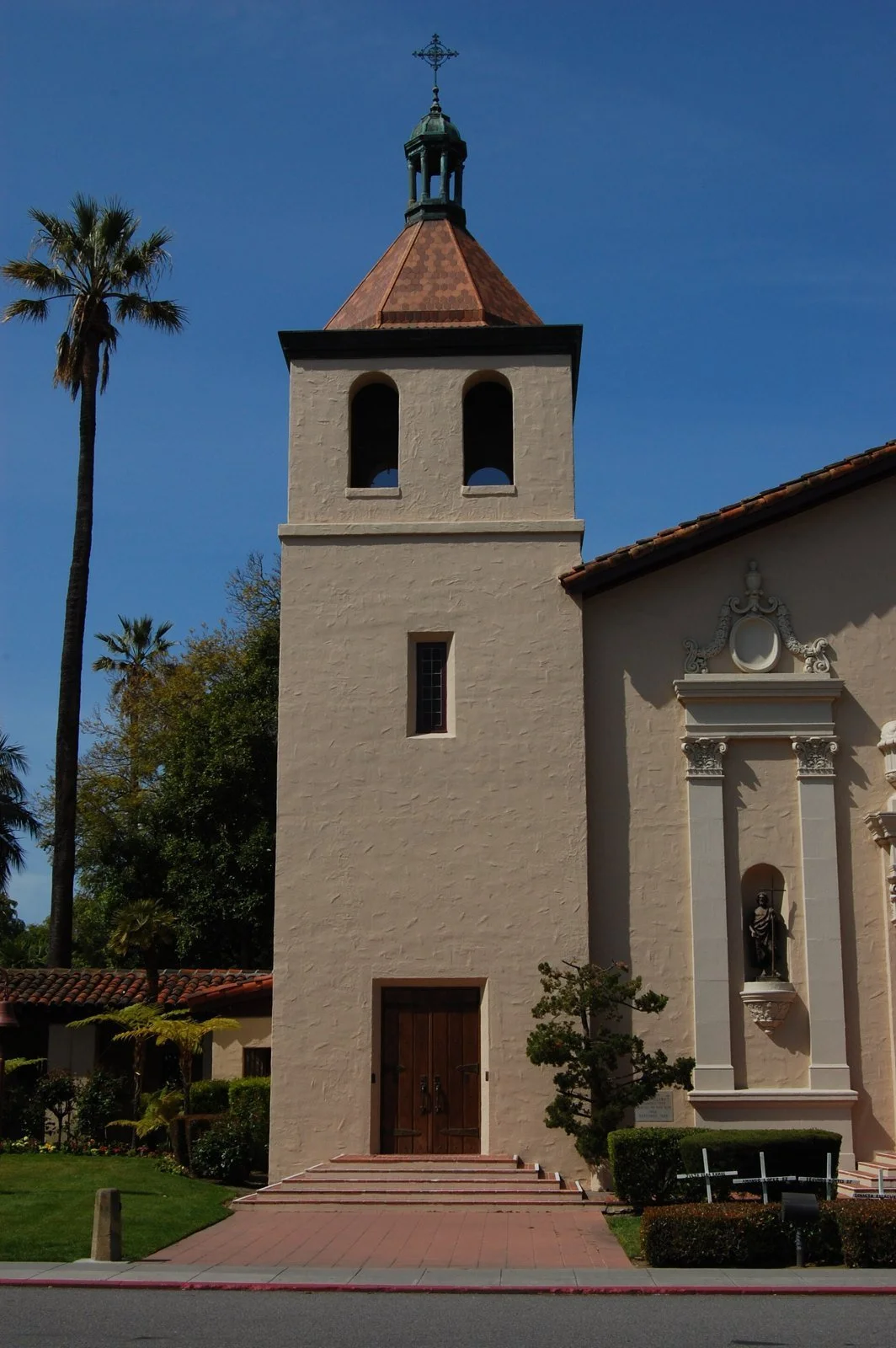
The bell tower of Mission Santa Clara de Asís. Indigenous Peoples’ Day 2026 opened the mission’s 250th-anniversary year. Photo: Eugene Zelenko / Wikimedia Commons, CC BY-SA 4.0
It is not a small choice. Anniversaries of California missions have usually been told from the founders’ side: the padres, the bells, the adobe. Santa Clara chose to begin its 250th with the people who were here first, and to let them open it with their own ceremony on their own homeland.
The schedule then called for a community brunch and resource fair on the lawn by O’Connor Hall. The afternoon belonged to the Fourth Annual Native American Symposium.
Indigenous Solidarity
The symposium’s theme was “Indigenous Solidarity: Generational Struggles Towards Liberation and Nation Building.” It was planned with the Tribe and co-presented by the university’s Office for Campus Climate and Belonging, the de Saisset Museum and the Community Heritage Lab. The program followed history in order, in three panels: the pre-mission era, the Spanish and Mexican contact period, and the U.S. colonial period to the present.
The program listed Chairwoman Charlene Nijmeh as moderator of all three, and her panelists showed what solidarity looks like in practice. From the Tribe came Joseph “Joey” Iyolopixtli Torres, culture bearer and dance captain, and Bernadette Quiroz, who leads the reawakening of the Chochenyo language. With them sat Troy Hatch, a California Indian ceremonialist whose work connects communities such as Shingle Springs with the Ohlone; Yei Tochtli Mitlalpilli of Calpulli Tonalehqueh, the San José Mexica danza community that hosts the Mexica New Year; and Richard “Razzle Dazzle” Regudo, a Miwok elder who has led an intertribal youth program for more than 30 years.
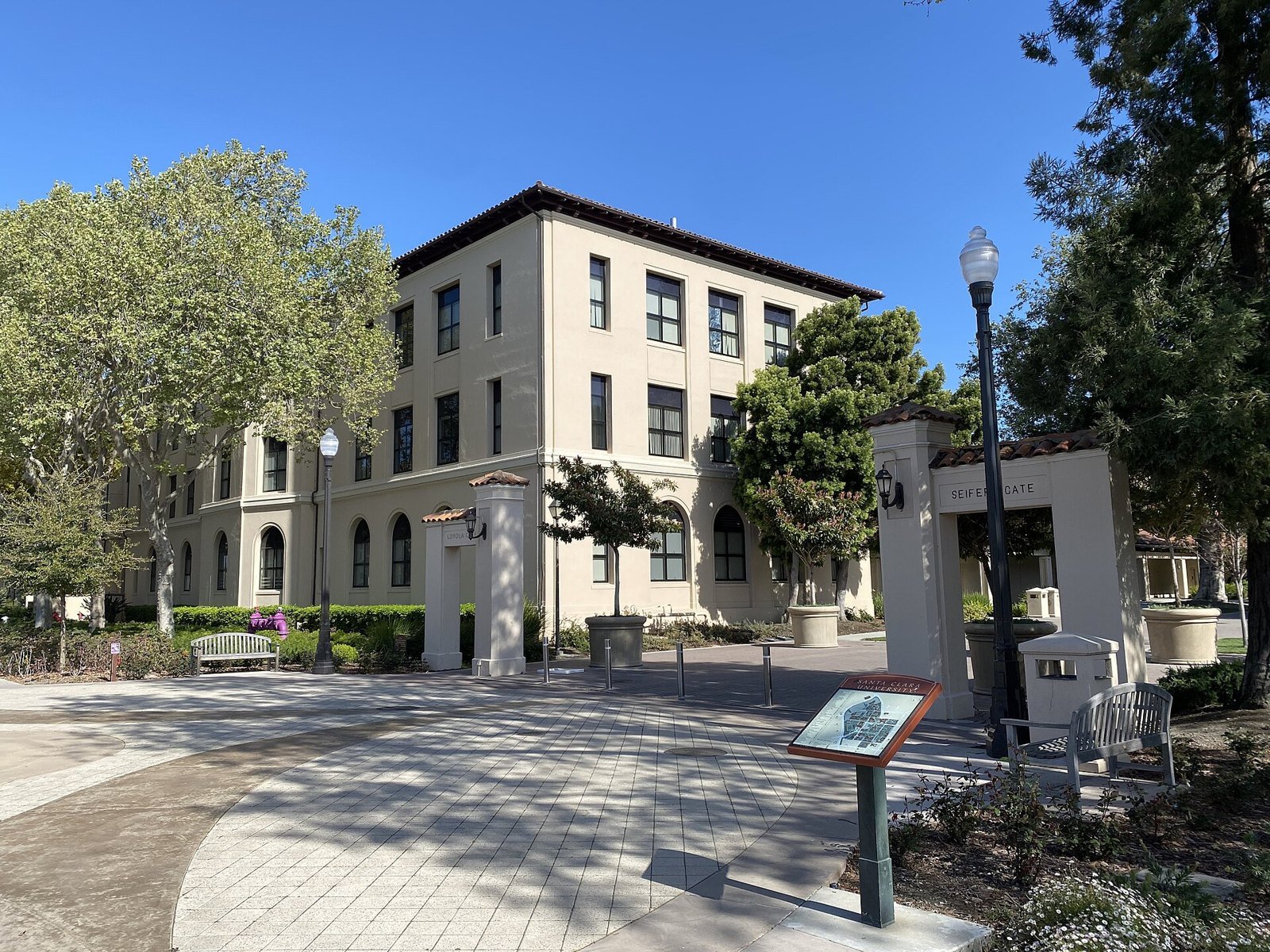
The Santa Clara University campus, built on the site of the third Mission Santa Clara. Photo: Cristiano Tomás / Wikimedia Commons, CC BY-SA 4.0
The university’s speaker profiles describe each of them in terms of showing up for one another. Hatch, the profile says, treats “another nation’s fight for recognition and cultural return as a shared obligation, not a spectator event.” Regudo stood with Muwekma singers and dancers at the Trail of Truth’s send-off at Crissy Field in 2024. Mitlalpilli, whose calpulli gave the night before its new year to California’s nations at Cali Native Nights in March, insists that Indigenous people are not immigrants on their own land.
The SCU anthropologist Lee Panich set the stage with a short talk on his book Inside We Will Receive Justice: Native Histories of the Collapse of the California Missions. The full recording of the symposium is now on the university’s website.
“We are not just part of the past. We are here, we are living our culture, and we are carrying it forward.” —Muwekma Ohlone Tribe, Indigenous Peoples’ Day 2026
A Year Before
The partnership did not start this year. On Indigenous Peoples’ Day 2025, Oct. 13, the third annual symposium took up “Social Justice and a Call to Action.” Julie Dominguez and Joseph Torres of the Tribe gave the blessing and land acknowledgment, and Santa Clara Councilmember Suds Jain brought the city’s welcome. Eight months later, Jain voted for Santa Clara’s resolution asking Washington to reinstate the Tribe. Torres presented on the Trail of Truth. A youth panel brought in students from the Indigenous Justice Coalition at Bellarmine College Preparatory.
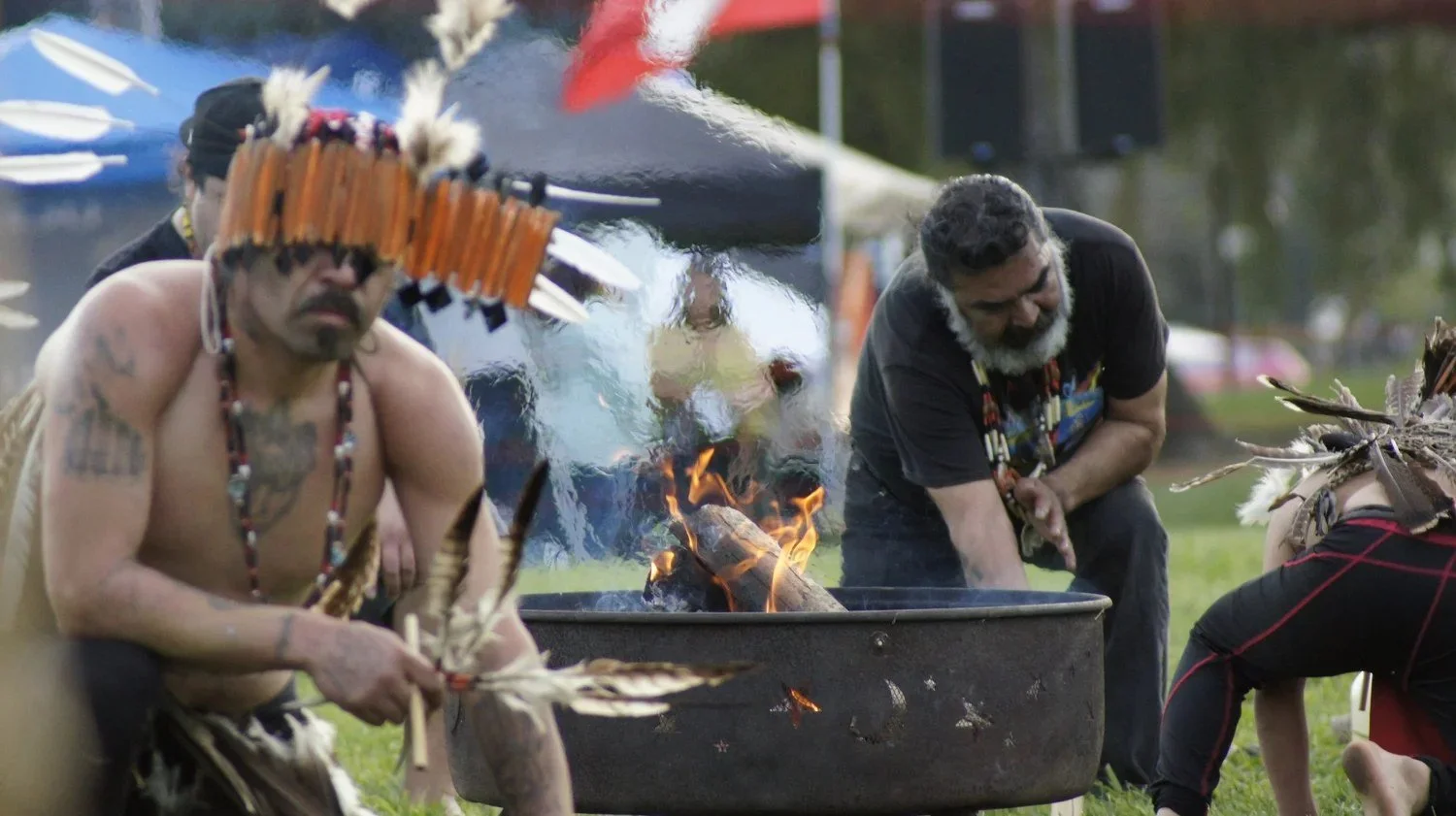
Tending the fire at Cali Native Nights in San José, March 2026. Ceremony, song and dance also opened Indigenous Peoples’ Day at Santa Clara. Photo: Tiffany Williams / Muwekma Ohlone Preservation Foundation
That afternoon The Santa Clara profiled Isabella Gomez ’27, the first member of the Muwekma Ohlone Tribe to attend the university and the first recipient of its Ohlone and Muwekma Ohlone Scholarship. She runs a summer cultural camp for Ohlone youth. She spoke honestly about studying on mission ground: “The idea that I’m getting my education in a space where 230 years ago I probably would’ve been dead at this age.” She also spoke about what made it possible: “years of relationship building that my tribe—and SCU—had to make it comfortable for me to be in a space that is historically filled with injustice and trauma.”
Her last words to the paper could serve as the theme of the whole year: “Indigenous people are not ancient history; we’re very much still alive. We’re here.”
Thank You
On Indigenous Peoples’ Day 2026, the Tribe posted a video message. “This year, our partnership with Santa Clara University creates another meaningful space for Muwekma voices, culture, and living history to be recognised and shared,” it said. “We are not just part of the past. We are here, we are living our culture, and we are carrying it forward.”
The Foundation thanks Santa Clara University, including its Inclusive Excellence division, the Office for Campus Climate and Belonging, Mission and Ministry, the de Saisset Museum and tUrn, along with SVCreates and the County of Santa Clara, which supported the day. Special thanks go to Ray Plaza, the university’s coordinator for the symposium. The mission’s 250th year has begun at dawn, with the people who were here before it.
Editor’s note: Program details come from Santa Clara University’s Indigenous Peoples’ Day and symposium pages and from The Santa Clara (Oct. 13, 2025 and Oct. 11, 2026). The Cali Native Nights photograph was taken in March 2026, not at Santa Clara. Charlene Nijmeh is president of the Muwekma Ohlone Preservation Foundation, which publishes this newsletter; Joseph Torres is its Director of Cultural Programs, and Bernadette Quiroz serves on its board.