
Raising the Flag
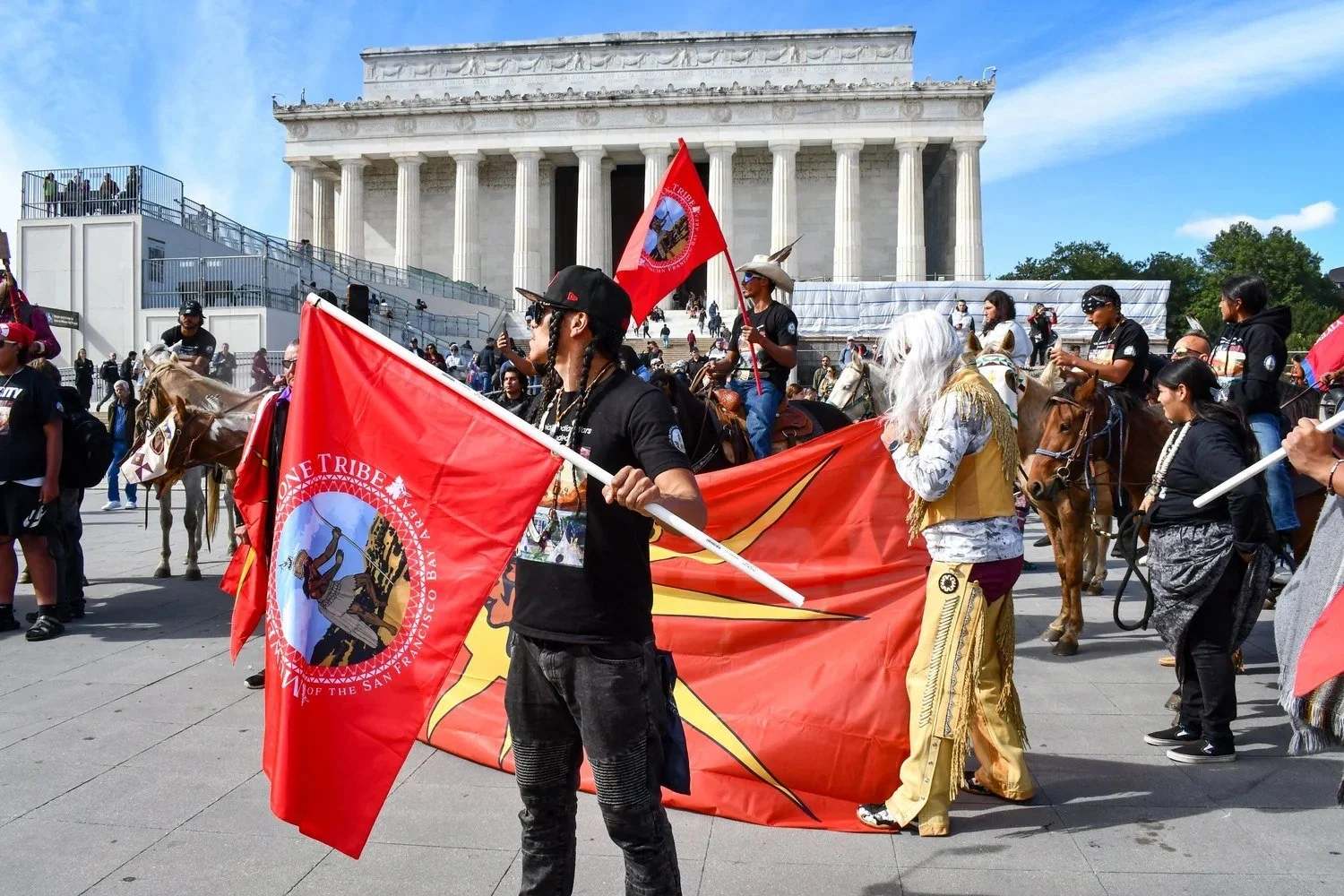
The Muwekma Ohlone flag, red with the Tribe’s seal, held high in front of the Lincoln Memorial during the Trail of Truth, October 2024. Photo: Muwekma Ohlone Preservation Foundation
In Milpitas, it was a tradition renewed. In San José, it was a first. In the last weeks of 2025, two South Bay cities raised the red flag of the Muwekma Ohlone Tribe, and the Tribe’s chairwoman told one of them what should come next.
A city flagpole is about as modest as civic architecture gets. It’s a pole, a halyard, and a rule about who decides what goes up. That is why a flag raising means something. When a city hands its pole to a people, it is saying out loud whose land the building stands on.
In November and December of 2025, two cities at the south end of the bay said it.
Milpitas, Once Again
In November 2025, the City of Milpitas invited the Muwekma Ohlone Tribe of the San Francisco Bay Area to raise its flag for Native American Heritage Month. It was not the first time. In a post afterward, the Tribe called it “a tradition we have carried forward for the past several years, and one that continues to fill our community with pride.”
This year the city added something: a formal commendation honoring the Tribe’s heritage, resilience and contributions. In the Tribe’s words, it recognized “not only of our ancestors, but of the generations who carry this legacy forward today.”
The Tribe wrote that raising the flag “was more than ceremonial. It was recognition, visibility, and respect.” Then it said what the flag meant, in four plain clauses: “our tribe is still here, our culture is alive, our history matter and our story continues.”
The post also looked ahead. Standing together with leadership, community and allies, it said, “reaffirmed that acknowledgment must happen not only in tradition, but eventually in policy and history.”
San José, for the First Time
In mid-December, the Tribe posted a flyer. On Tuesday, Dec. 16, from noon to 1 p.m., the Muwekma Ohlone flag would be raised on the plaza at San José City Hall, “a moment to honor our ancestors, our living community, and our continued presence on our ancestral homeland.” The flyer promised “a day of acknowledgement, blessing, dance, and shared reflection,” and thanked Councilmember Peter Ortiz “for his continued allyship, respect, and support of our tribe.”
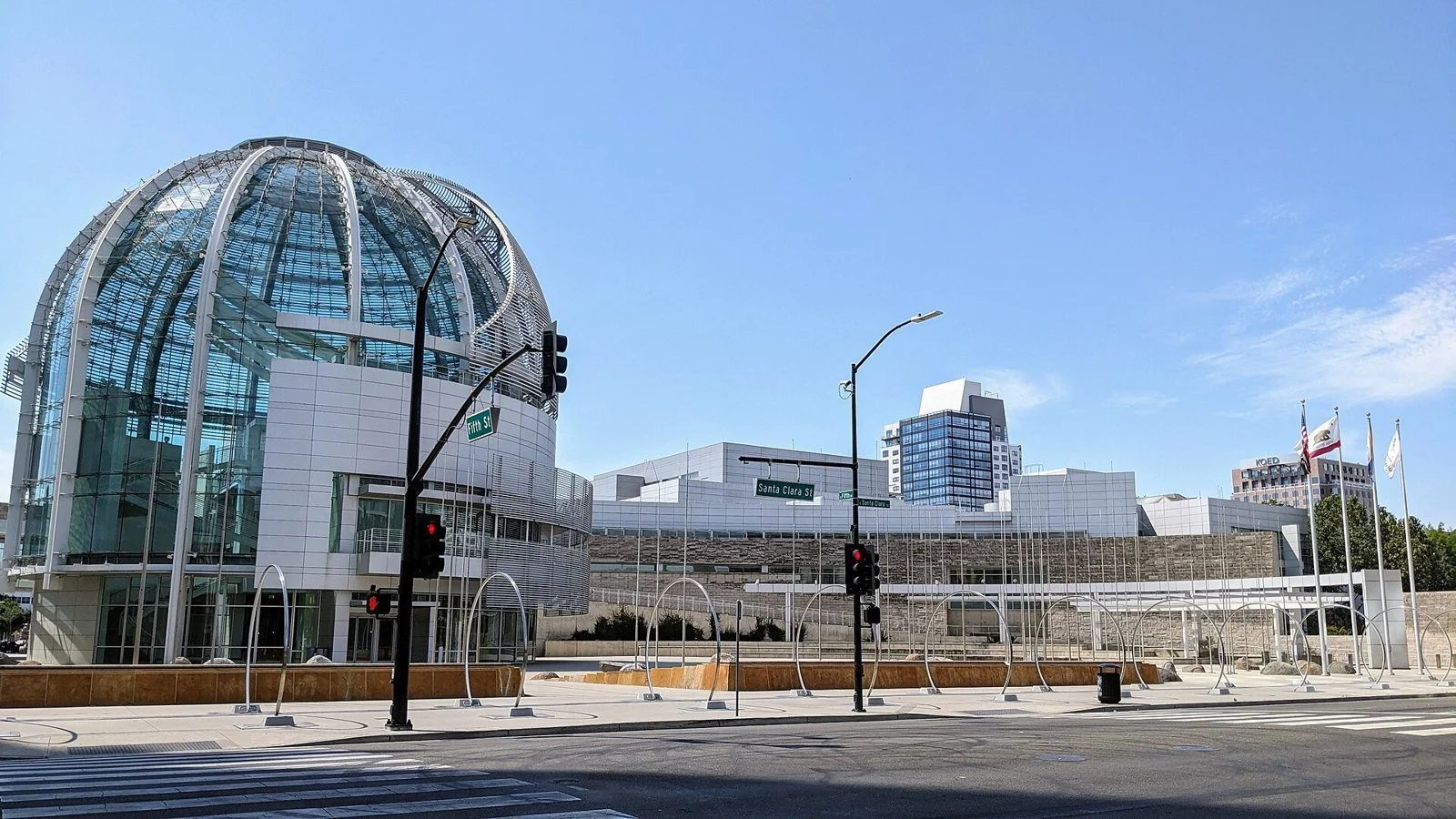
San José City Hall on East Santa Clara Street. On Dec. 16, 2025, the Muwekma Ohlone flag was raised on the plaza for the first time. Photo: The wub / Wikimedia Commons, CC BY-SA 4.0
At 1:30 that afternoon, the ceremony moved indoors to the City Council chamber, where the Tribe had said Chairwoman Charlene Nijmeh would accept the city’s Native American Heritage Month proclamation. Mayor Matt Mahan invited Ortiz to the podium to present it, and tribal members came down to stand with them.
Ortiz opened by acknowledging that the council was meeting on the unceded ancestral land of the Muwekma Ohlone, a people who were here long before the city, the state or the nation. He described the proclamation as a commitment to honor Indigenous people and lift up Indigenous voices in the city’s civic life, and he thanked the chairwoman for her leadership and partnership. Then he named what had happened on the plaza an hour earlier. By his account, it was the first time in modern history that the tribal flag had been raised in front of San José City Hall.
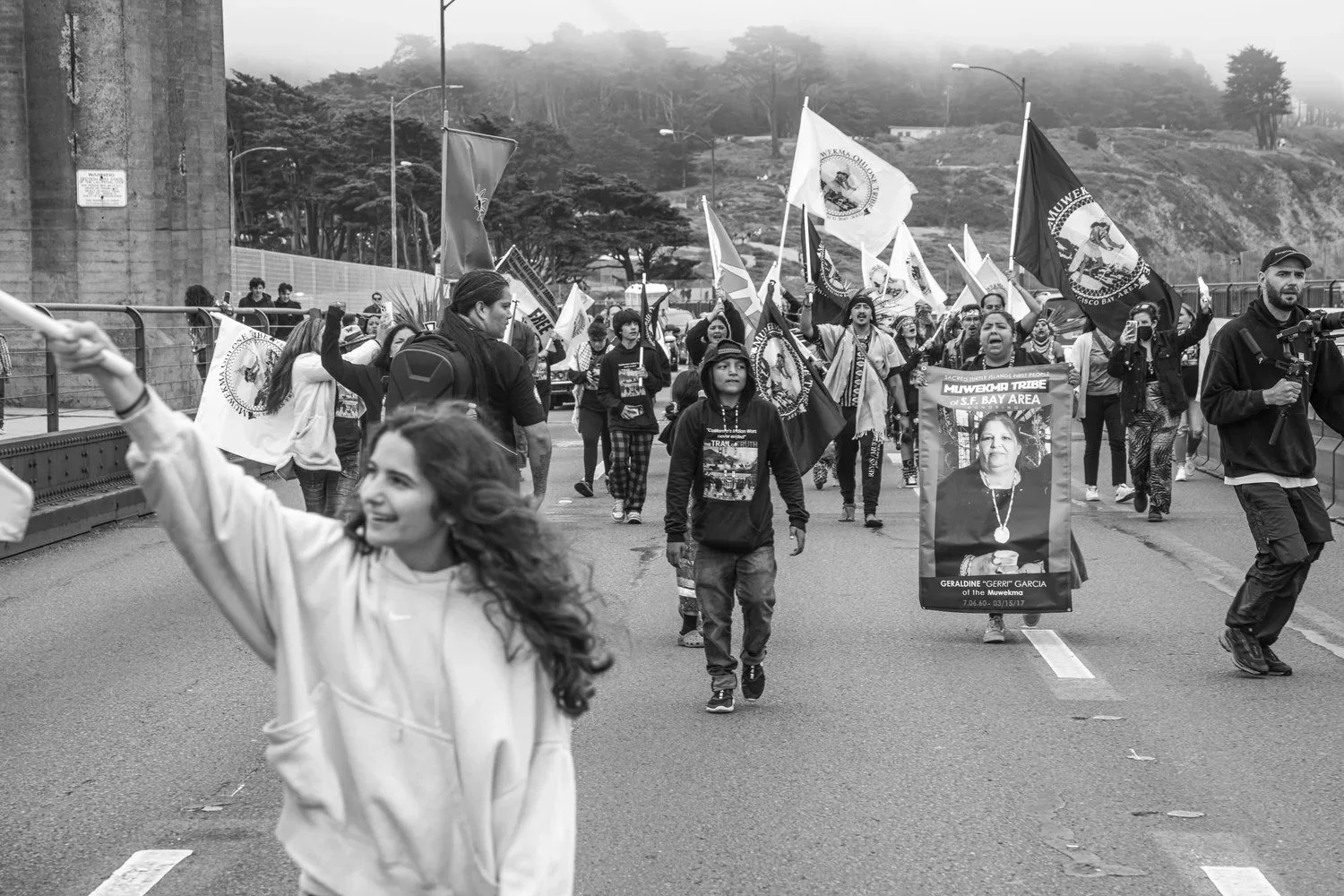
Muwekma tribal members and supporters march with flags and banners at the start of the Trail of Truth in San Francisco, 2024. Photo: Muwekma Ohlone Preservation Foundation
Persistence
Nijmeh accepted the proclamation for the Tribe. She opened with a greeting in Chochenyo, thanked the mayor and council, and told the room that raising the flag affirmed something more than a symbol: that the Muwekma Ohlone are the original people of this land.
She described a nation of more than 600 enrolled members still working to have its sovereignty affirmed. She laid out the history in a few sentences. The federal government had acknowledged that the Tribe was federally recognized and never terminated, she said, but administrative errors and present-day politics had left it in limbo. Washington has corrected mistakes like this before, she pointed out, as it did in 2019 for the Little Shell Tribe of Chippewa Indians in Montana.
Then she made a request. She was grateful for the proclamation and the flag, she said, but she asked the council for something more: a resolution calling on Congress to restore the Tribe’s status. San José, she said, should lead, and should show the federal government that it supports its local tribe. She closed by telling the council that, after a very long road, she believes justice answers to persistence rather than politics.
“Acknowledgment must happen not only in tradition, but eventually in policy and history.” —Muwekma Ohlone Tribe, on the Milpitas flag raising
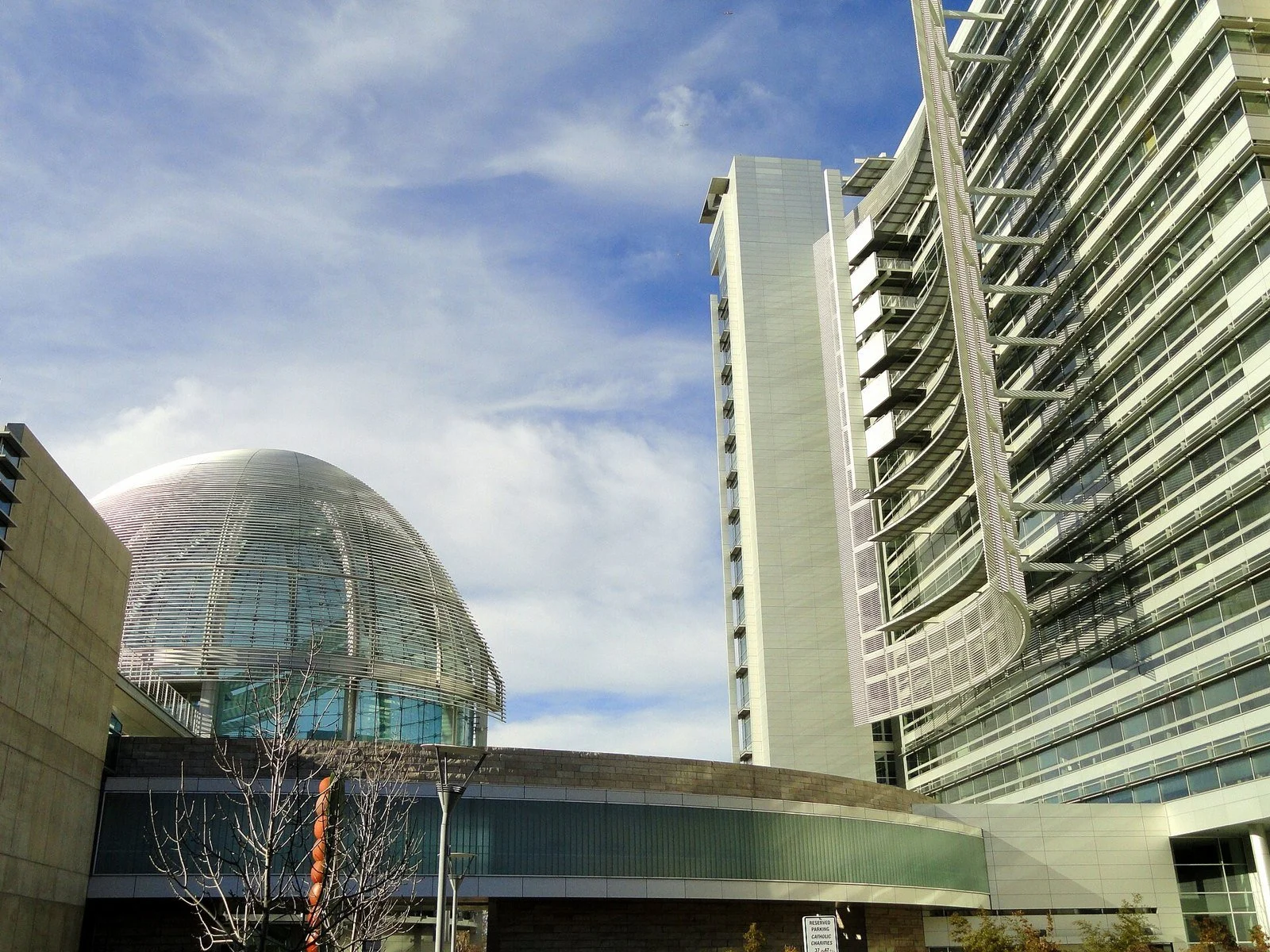
The civic plaza at San José City Hall, where the flag raising took place at noon before the council meeting. Photo: Daderot / Wikimedia Commons, CC0
What a Flag Can and Can’t Do
A flag on a city pole does not change a federal list. Neither does a proclamation. Both are forms of recognition, though, and the Tribe has never treated them as small. Every one adds a government, elected by the people who now live on Muwekma land, to the public record of who was here first and who is still here.
The flag ceremonies also carried the request forward. Nijmeh told San José that other cities were planning resolutions of their own. Six months later, on June 9, 2026, the City of Santa Clara adopted one, asking Congress and the Interior Department to reinstate the Tribe. (We tell that story elsewhere in this Newsletter.)
Persistence, in other words, is not a metaphor. It looks like a flag going up in Milpitas for another year running, and in San José for the first time. And it looks like a chairwoman who, on the day of the honor, asks for what comes next.
Editor’s note: The account of the San José City Council meeting is paraphrased from the city’s caption transcript of the Dec. 16, 2025 meeting. That transcript is not an official record, so no direct quotations from the meeting are used. Quotations about the flag raisings come from the Tribe’s posts of Nov. 29 and Dec. 14, 2025. Charlene Nijmeh is president of the Muwekma Ohlone Preservation Foundation, which publishes this newsletter.