
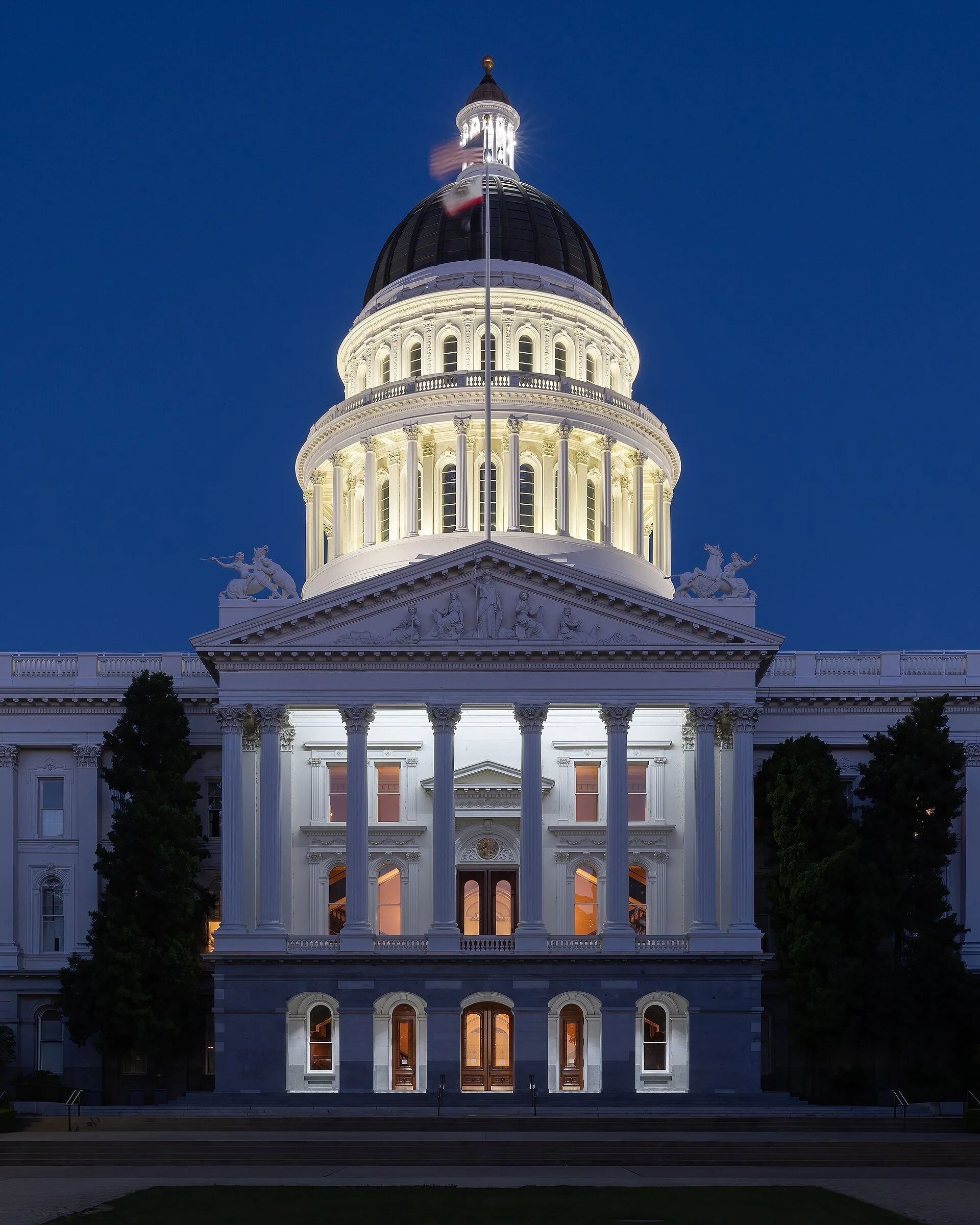
The California State Capitol in Sacramento at dusk. Photo: Frank Schulenburg / Wikimedia Commons, CC BY-SA 4.0
Proposition 45 would change which tribes have a right to be consulted before ground is broken on fast-tracked projects. The Muwekma Ohlone Tribe would not be one of them.
By Muwekma Ohlone Preservation Foundation · October 24, 2026
On Nov. 3, Californians will vote on Proposition 45, which would create an optional fast track through the California Environmental Quality Act for “essential projects”: housing, hospitals, clean energy, water, schools, public safety and wildfire work, transportation and broadband. Most of the debate is about speed. For the Muwekma Ohlone Tribe, the measure is about something else: whether the Tribe has a say before construction begins in its own homeland.
What the law does today
Since 2015, California law has required public agencies to consult with California Native American tribes when a project could affect a tribal cultural resource, such as a sacred place or a burial ground. The state defines those tribes through a list kept by the Native American Heritage Commission. That list includes tribes the federal government recognizes and tribes it does not. The Muwekma Ohlone Tribe is on it, and it has used consultation to take part in the review of projects on its ancestral lands.
What Prop 45 would change
For essential projects, Prop 45 replaces that definition with a new term, “Consulting Tribe,” and limits it to tribes on the federal government’s list of recognized tribes. The state’s nonpartisan Legislative Analyst’s Office summed up the effect: the measure “requires the agency and applicant to consult about the project only with California native tribes that have been formally recognized by the federal government. (Current law requires consultation with a wider range of tribes.)”
“Current law requires consultation with a wider range of tribes.” —Legislative Analyst’s Office
What it means for Muwekma
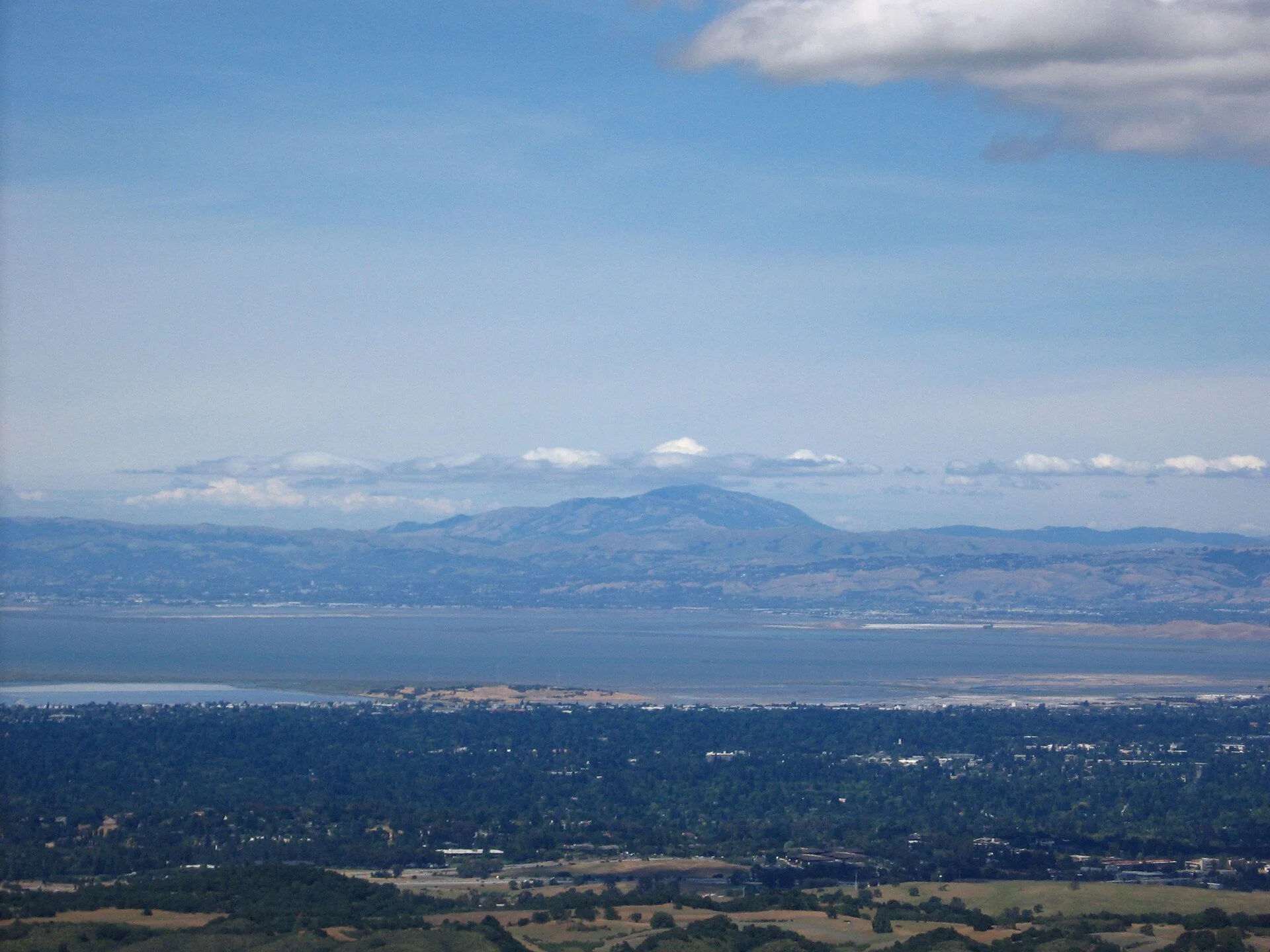
Mount Diablo across the bay, seen from Windy Hill on the Peninsula. Photo: David R. Ingham / Wikimedia Commons, CC BY-SA 3.0
From San Francisco to the Santa Clara Valley and east to the Livermore Valley, the Bay Area is Ohlone land, and no Ohlone tribe is on the federal list. The Muwekma Ohlone Tribe’s ancestors were recognized by the federal government as the Verona Band in the early 20th century, but the Bureau of Indian Affairs denied the Tribe’s petition for federal acknowledgment in 2002. Today the Tribe can request consultation on projects in its homeland. On a project using Prop 45’s fast track, it could not.
The measure also adds new protections, including an early search of sacred-lands records and express protection for Indian burials and cemeteries. Each applies only to a Consulting Tribe, so none would reach Muwekma’s ancestors.
What stays the same
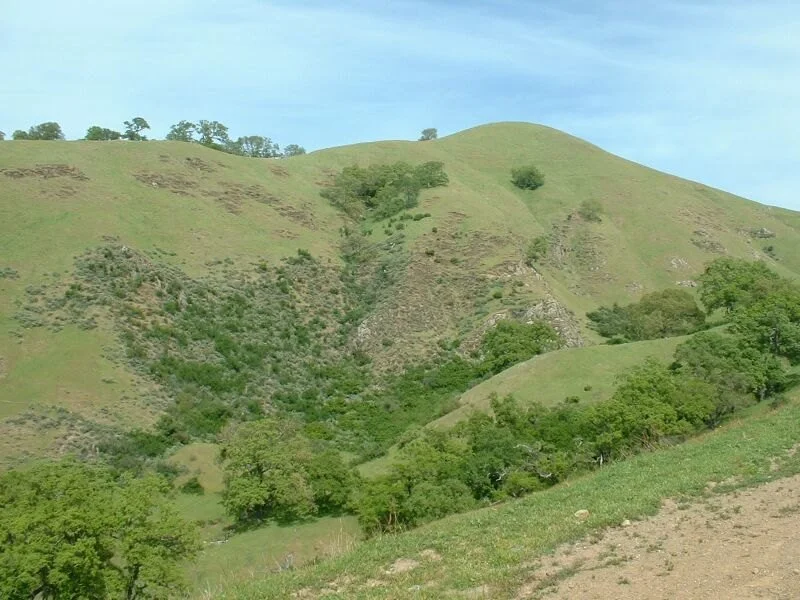
A spring hillside in Sunol Regional Wilderness, Alameda County. Photo: Stephen Lea / Wikimedia Commons, public domain
The laws that require work to stop when human remains are found, and that direct the Native American Heritage Commission to name a Most Likely Descendant, are not changed by the measure. The fast track is optional, and projects outside the eight categories would stay under current law. But those burial laws take effect only after a burial has been reached. Consultation comes earlier, when a project can still be moved.
Where the Tribe stands
The Muwekma Ohlone Tribe opposes Prop 45. For most voters, the measure is about how fast California builds. For Muwekma, it is about whether the Tribe is in the room when it does.
Editor’s note: This explainer is based on public records: the measure text, the Legislative Analyst’s Office analysis and the Bureau of Indian Affairs. No one was contacted for comment. This is not legal advice.