
A Year of Being Seen
In twelve months, the Muwekma Ohlone Tribe raised its flag at San José City Hall, lit its first cultural burn in nearly 150 years, won state funding to buy about 154 acres of its homeland, and testified at the State Capitol. Here is the year, month by month, and the people who made room for it.
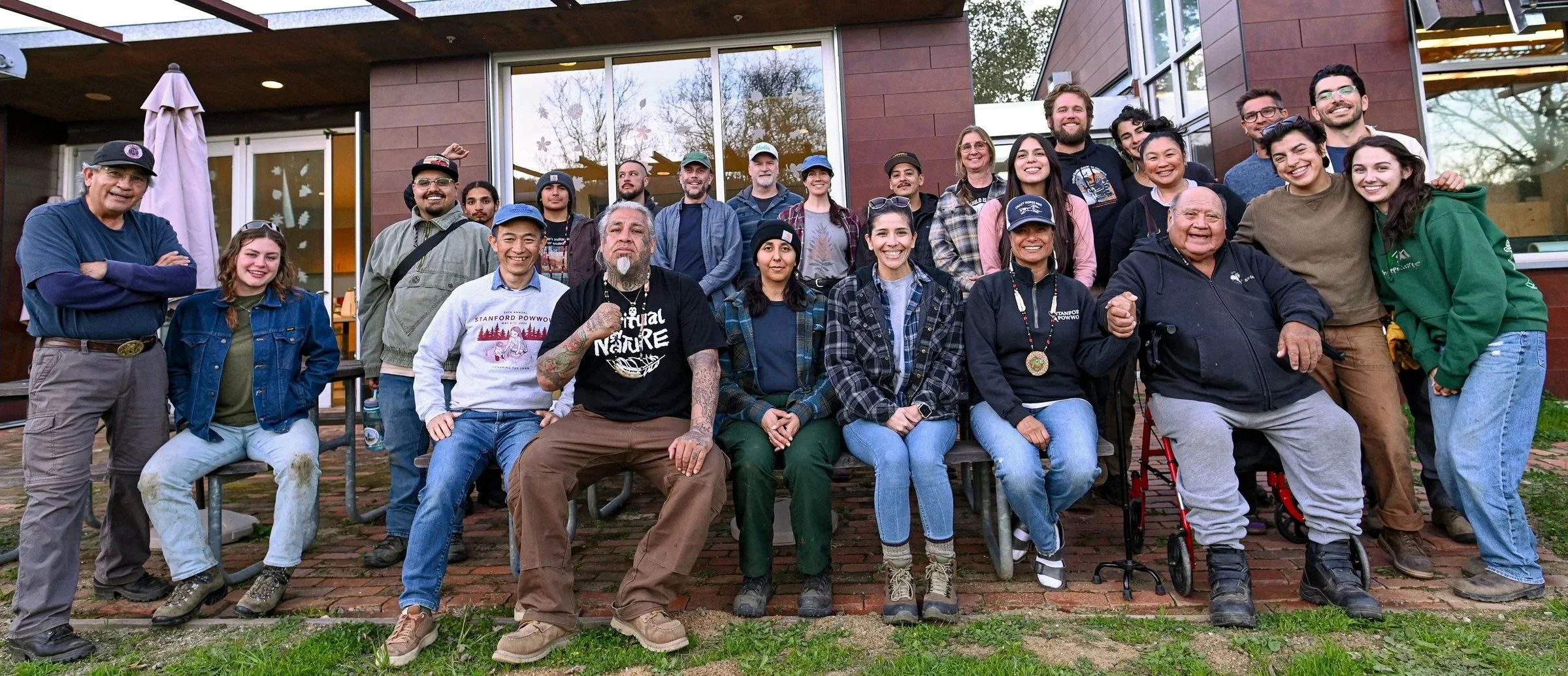
Participants in the Muwekma Ohlone Tribe’s cultural burn training at ’Ootchamin ’Ooyakma (Jasper Ridge Biological Preserve), January 2026. Photo: Marina Luccioni / Muwekma Ohlone Preservation Foundation
Federal recognition still hasn’t come. The Muwekma Ohlone Tribe of the San Francisco Bay Area, recognized by the United States as the Verona Band of Alameda County, never terminated by Congress, and dropped from federal rolls by an Indian agent in 1927, is still waiting for Washington to fix its mistake.
Recognition has many forms, though, and over the past year the Bay Area offered nearly all the others. Cities raised the Tribe’s flag and passed resolutions. Universities handed over their podiums and their land for ceremony. A museum told the Tribe’s story in its own words. The state paid to return land. Lawmakers asked the chairwoman to testify. Here is that year, from October 2025 to October 2026.
October 2025
Sacramento, Oct. 8. The Strategic Growth Council approved $4.47 million in state farmland-conservation funding for the Tribe to buy about 154 acres in the East San José foothills.
Santa Clara University, Oct. 13. On Indigenous Peoples’ Day, SCU’s third annual Native American Symposium, planned with the Tribe, took up “Social Justice and a Call to Action.” Joseph “Joey” Iyolopixtli Torres told the story of the Trail of Truth, and Isabella Gomez ’27, the first Muwekma student at the university, told the student paper: “Indigenous people are not ancient history; we’re very much still alive. We’re here.” (Read more in “Gathering Together at Dawn.”)
November 2025
Milpitas. For another year running, the City of Milpitas invited the Tribe to raise its flag for Native American Heritage Month. This time it added a formal commendation. “Our tribe is still here, our culture is alive,” the Tribe wrote afterward.
Jasper Ridge, Nov. 11 and 18. Stanford’s biological preserve opened its lecture season with Chairwoman Charlene Nijmeh on “The Trail of Truth Continues,” before more than 120 people, and Bernadette Quiroz on “Chochenyo: A Language Reawakened.” (Read “The Ridge Listens.”)
December 2025
Sacramento, Dec. 10. A second state grant, $250,000, went to build the Tribe’s Conservation Office and train tribal members in land stewardship.
San José, Dec. 16. The Muwekma Ohlone flag rose over the City Hall plaza, the first time in modern history, as Councilmember Peter Ortiz told the council that afternoon. Accepting the city’s Native American Heritage Month proclamation, Nijmeh asked the council to call on Congress to restore the Tribe’s status, and said justice answers to persistence rather than politics. (Read “Raising the Flag.”)
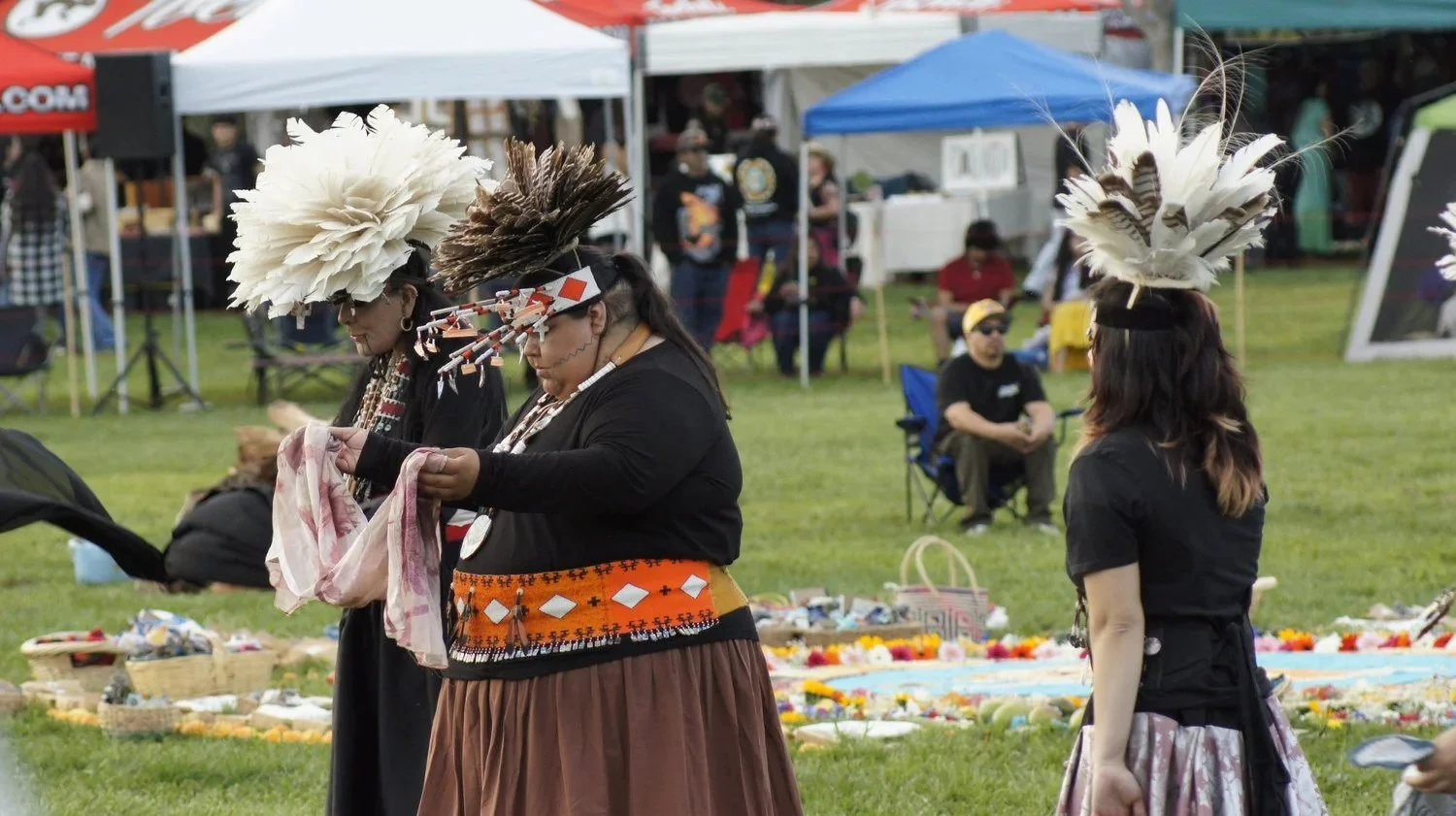
Women dancers in regalia at Cali Native Nights, Emma Prusch Farm Park, March 2026. Photo: Tiffany Williams / Muwekma Ohlone Preservation Foundation
January 2026
’Ootchamin ’Ooyakma. About 60 people circled up in the oak woodland of Jasper Ridge for the Tribe’s first cultural burn in nearly a century and a half, by Stanford’s account. Thirteen small piles of oak and coyote brush were lit with a lighter, not a drip torch. By August, Muwekma leaders and Stanford undergraduates had published a peer-reviewed study of what the fire did to the soil. (Read our first feature, “The Fire Comes Back to the Ridge.”) The same month, Stanford lecturer Michael Wilcox spoke at the preserve on “Cultural and Natural Landscapes of the Muwekma Ohlone Tribe.”
March 2026
Emma Prusch Farm Park, March 13. The night before the Mexica New Year, Calpulli Tonalehqueh gave the dance circle to California’s first peoples for the fifth Cali Native Nights. Muwekma, Round Valley Covelo and Pomo dancers performed, and the night ended with the Bear Dance. “The Ohlone people went to sleep for a short period of time, but now we’re reawakened,” Nijmeh said. (Read “The Night Before the New Year.”)
Santa Clara City Hall, March 24. Tribal members went to the public comment microphone and asked the council to take up a recognition resolution. The council agreed to put it on the agenda.
May 2026
Stanford, May 4–5 and May 8. Nijmeh and Torres spoke at the Graduate School of Business conference “Indigenous Stewardship for Sustainability.” Four days later, Muwekma dancers opened the ceremony space at the 55th Stanford Powwow, “a powerful reminder of our enduring presence,” the Tribe wrote. (Read “Opening the Circle.”)
June 2026
Santa Clara, June 9. The Mission City’s council voted 6–0, with one abstention, for Resolution 26-9569, urging Congress, the White House and the Interior Department “to take all necessary steps to reinstate the Tribe on the list of federally recognized tribes.” (Read “The Mission City Says Reinstate.”)
Los Gatos, June 19. New Museum Los Gatos opened Reawakening: Muwekma Ohlone Culture and Connection in Pursuit of Recognition, built with the Tribe and San José State anthropologists. A companion show on land and sea opened July 17. (Read “Reawakening on Main Street.”)
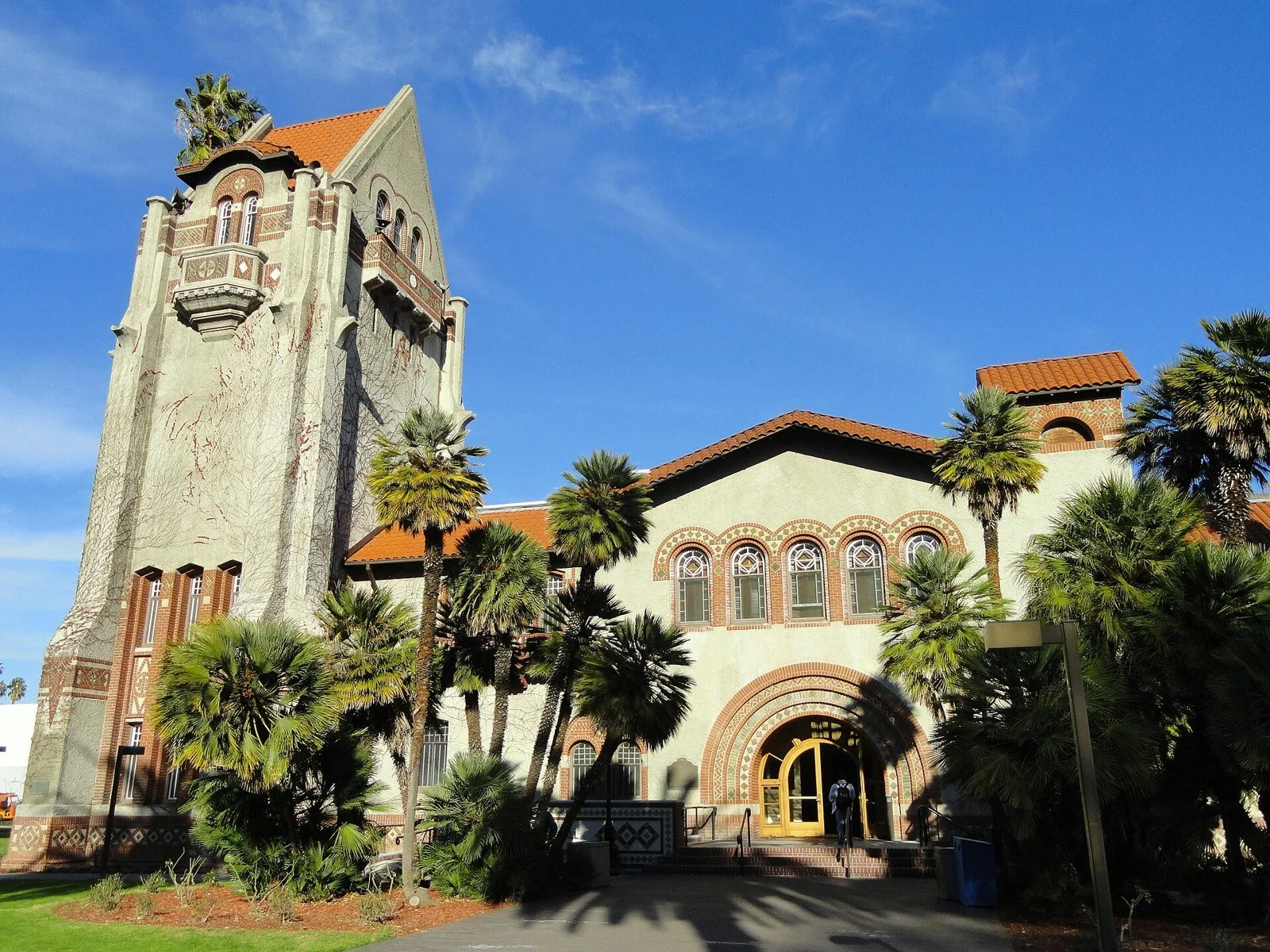
Tower Hall at San José State University, which hosted Bernadette Quiroz’s talk on the Chochenyo language in September 2026. Photo: Daderot / Wikimedia Commons, CC0
West Valley College. In a June post, the Tribe described joining with West Valley College to mark the National Day of Awareness for Missing and Murdered Indigenous Women, Girls and Two-Spirit relatives, creating “space for truth telling, education, and meaningful dialogue.”
July 2026
Kaphan Húunikma (Three Wolves). In a pair of July posts, the Tribe recalled that when ancestral remains were uncovered at the Three Wolves site, Muwekma people were active participants in the careful excavation, documentation and reburial of their own ancestors, not merely consultees. It also called for accuracy in how the land’s history is told: “Every landscape tells a story but only if it’s told truthfully.”
August 2026
The State Capitol, Aug. 4. Before a joint hearing on the University of California’s slow return of Native ancestors, Nijmeh asked lawmakers to press Sens. Alex Padilla and Adam Schiff for a California-specific fix to federal NAGPRA rules. “We are the next generation standing before this body,” she said. “We’re not going anywhere.” (Read “We’re Not Going Anywhere.”)
September 2026
Jasper Ridge, Sept. 20. The Organization of Biological Field Stations gave the preserve its 2026 Advancing Equity Award, citing youth campouts, cultural burning and public programs with the Tribe. “This is what a land acknowledgement should be: a whole program,” one committee member added.
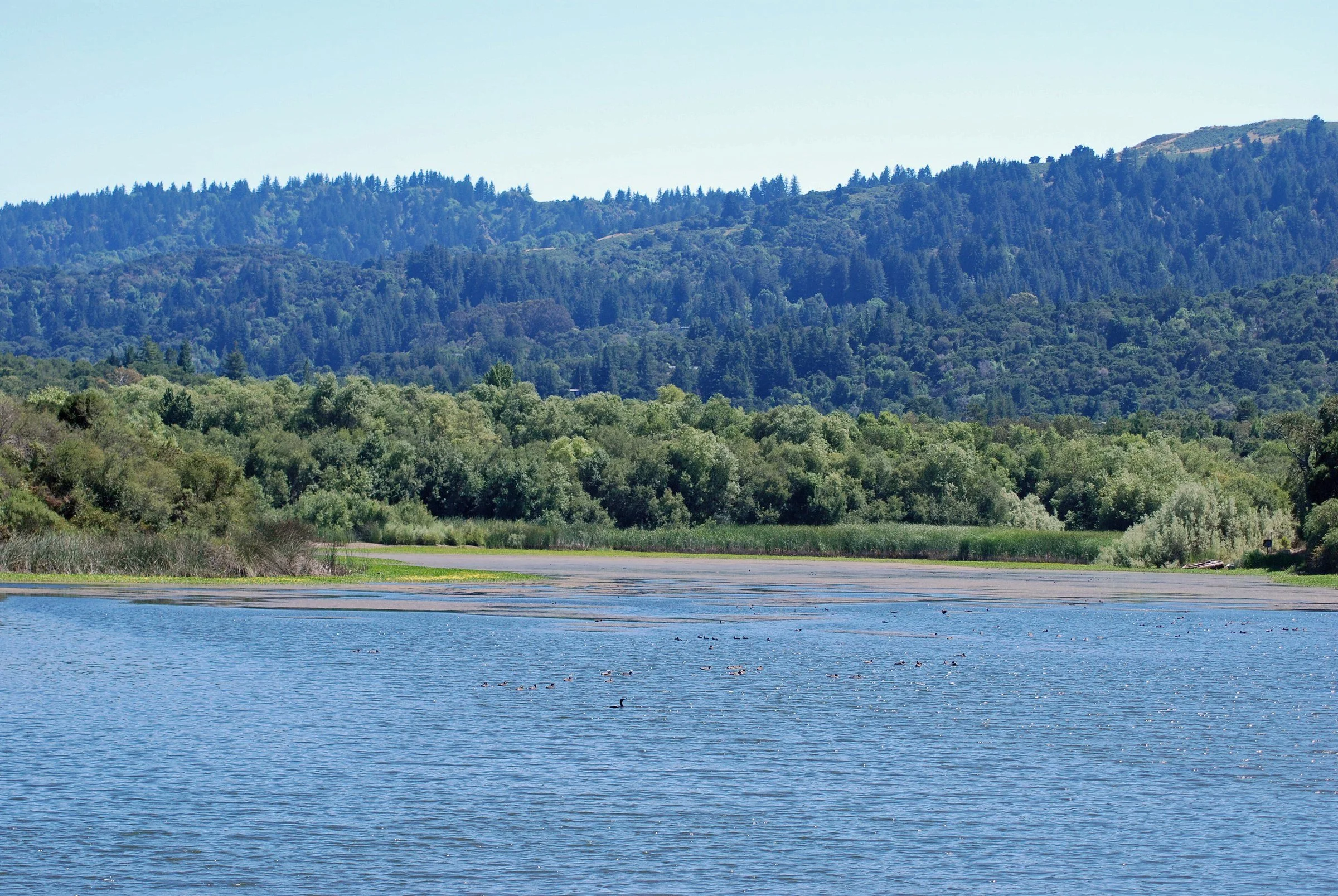
Searsville Reservoir in Jasper Ridge Biological Preserve, which won the 2026 OBFS Advancing Equity Award for its partnership with the Tribe. Photo: Schmiebel / Wikimedia Commons, CC BY-SA 3.0
San José State, Sept. 21. Bernadette Quiroz spoke on “Revitalization of the Chochenyo Ohlone Language” for the university’s Native American and Indigenous Studies Program.
October 2026
Santa Clara University, Oct. 12. ÓTTÓY RÓOTE HUŠÍŠTAK, “Gathering Together at Dawn,” began with a Sacred Dawn Circle in front of the Mission Church and opened the mission’s 250th-anniversary year with a focus on the time before the mission. Nijmeh moderated an afternoon of panels on Indigenous solidarity. (Read “Gathering Together at Dawn.”)
Alcatraz, Oct. 12. At the 47th Indigenous Peoples Day Sunrise Gathering, more than 2,000 people stood around a ceremonial fire on the island. CalMatters and ICT’s coverage noted that the Muwekma Ohlone, “whose homelands encompass much of what is now the Bay Area,” continue to seek federal recognition.
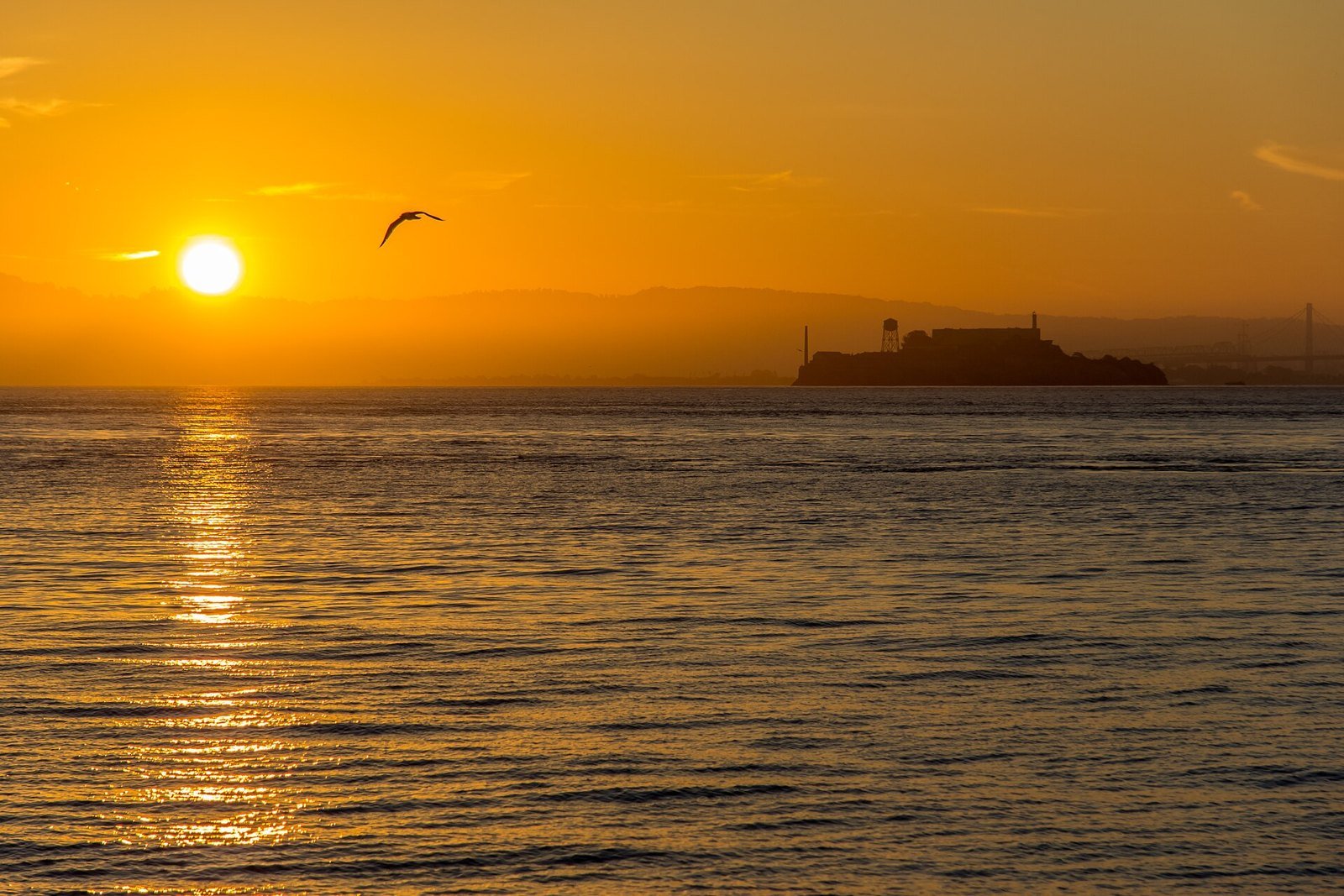
Sunrise over Alcatraz. Coverage of the island’s 47th Indigenous Peoples Day Sunrise Gathering, Oct. 12, 2026, noted the Muwekma Ohlone Tribe’s continuing fight for federal recognition. Photo: Andrew Moore from Johannesburg, South Africa / Wikimedia Commons, CC BY-SA 2.0
What Comes Next
None of this restores the Tribe to the federal list. Only Washington can do that. But a year like this one changes the conversation. It is harder to call a people “extinct,” or “not a real tribe,” when cities fly its flag, a university begins its 250th anniversary with its ceremony, the state approves money for it to buy back part of its homeland, and the Assembly asks its chairwoman to testify.
The Tribe put it best in its Indigenous Peoples’ Day message: “We are not just part of the past. We are here, we are living our culture, and we are carrying it forward.”
Thank you to every city, school, museum, preserve, agency and neighbor who made room this year. There is more to do. See you in the circle.
Editor’s note: Each item draws on sources listed in the source notes for this roundup and for the individual features. Charlene Nijmeh is president of the Muwekma Ohlone Preservation Foundation, which publishes this newsletter; Joseph Torres is its Director of Cultural Programs, and Bernadette Quiroz serves on its board.