
The Creek That Waited
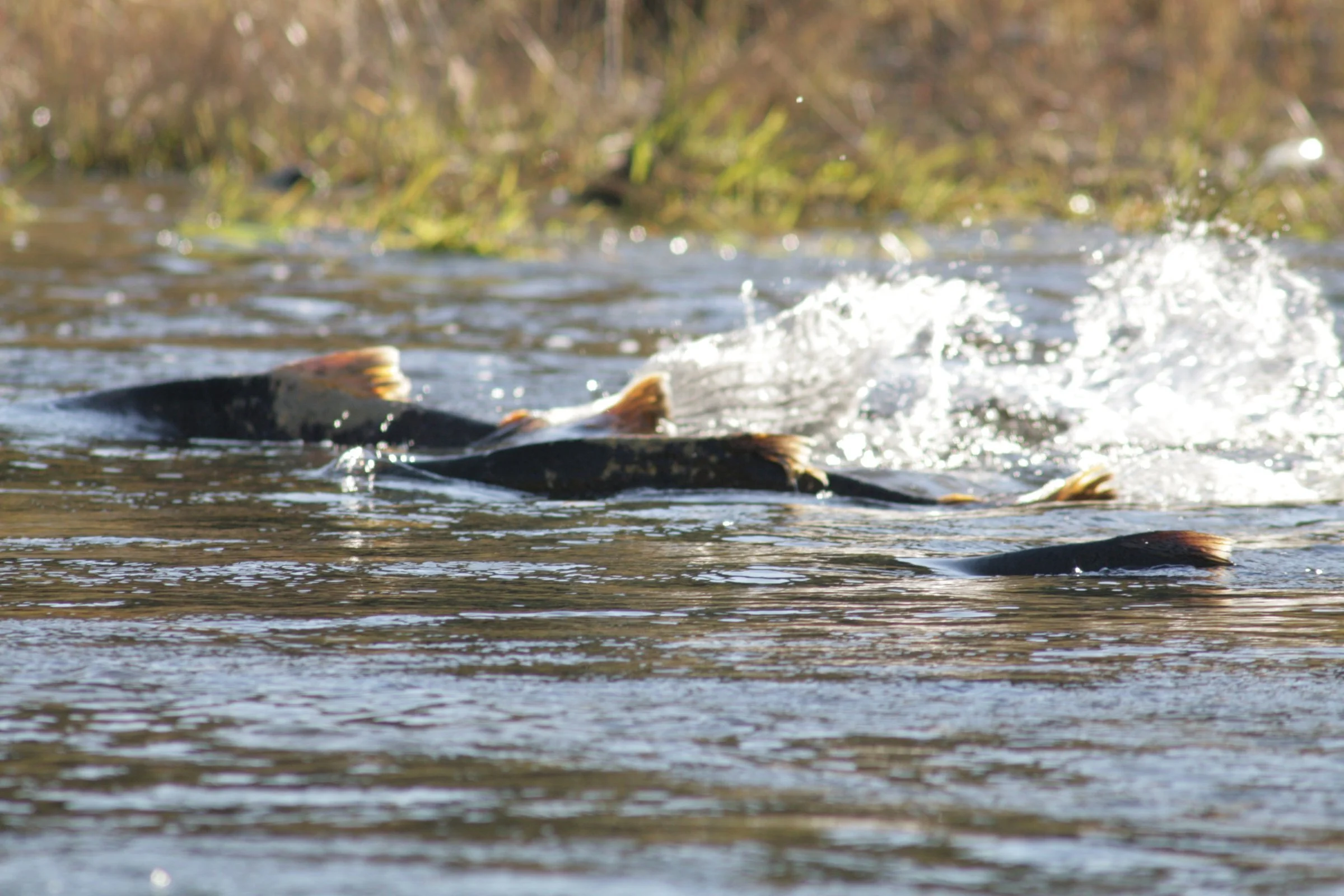
Chinook salmon push upstream on the lower Tuolumne River in California’s Central Valley. Fish of the same species reached Alameda Creek’s Sunol Valley in November 2025 for the first time since the 1950s. — Photo: Dan Cook / U.S. Fish and Wildlife Service (public domain)
For some 70 years, concrete kept salmon and steelhead out of Alameda Creek, the largest local stream feeding San Francisco Bay. The last barrier is gone, the fall run is due, and the creek still runs through the homeland of the Muwekma Ohlone Tribe, whose ancestors fished these waters long before any of it was built.
By Muwekma Ohlone Preservation Foundation · October 19, 2026
On Nov. 19, 2025, biologists watching a stretch of Alameda Creek in the Sunol Valley, just upstream of the Interstate 680 overpass, spotted two fish, each somewhere between 12 and 24 inches long. They were Chinook salmon. By the best available records, it was the first time salmon had reached that part of the watershed on their own since the 1950s.
The timing was almost too neat. Earlier that month, crews had finished removing the last major man-made barrier on the creek’s main stem: a concrete mat laid over a Pacific Gas & Electric gas pipeline, which had created an 8-foot drop that most fish could not get past. “We just wrapped up construction, and the fish are already finding their way home!” Claire Buchanan, Central California regional director of the nonprofit California Trout, said in the group’s announcement.
“We just wrapped up construction, and the fish are already finding their way home!” —Claire Buchanan, Central California regional director, California Trout
It is October again, and the creek’s watchers are waiting for rain. Chinook usually enter the system in “October, November, December,” Joseph Sullivan, fisheries program manager at the East Bay Regional Park District, told The Independent of Livermore last December. Steelhead come “January, February, March.” On Nov. 5, biologists, water managers and fishing groups will gather in Pleasanton, inside the Alameda Creek watershed, for the first Bay Area Steelhead Summit, a three-day conference meant, in its organizers’ words, to “evaluate steelhead status” and “assess progress toward recovery.”
There is a lot to assess. The reopening of Alameda Creek is one of the most hopeful environmental stories in the Bay Area, the result of nearly three decades of advocacy, science and patience. It is also a fragile one. The salmon that have come so far are strays, the steelhead the effort was built for are still hard to find, and federal climate policy turned sharply the other way this year. The creek also runs through the ancestral homeland of the Muwekma Ohlone Tribe, whose families lived in its watershed into the 20th century. For them, the question of what comes back to Alameda Creek is an old one.
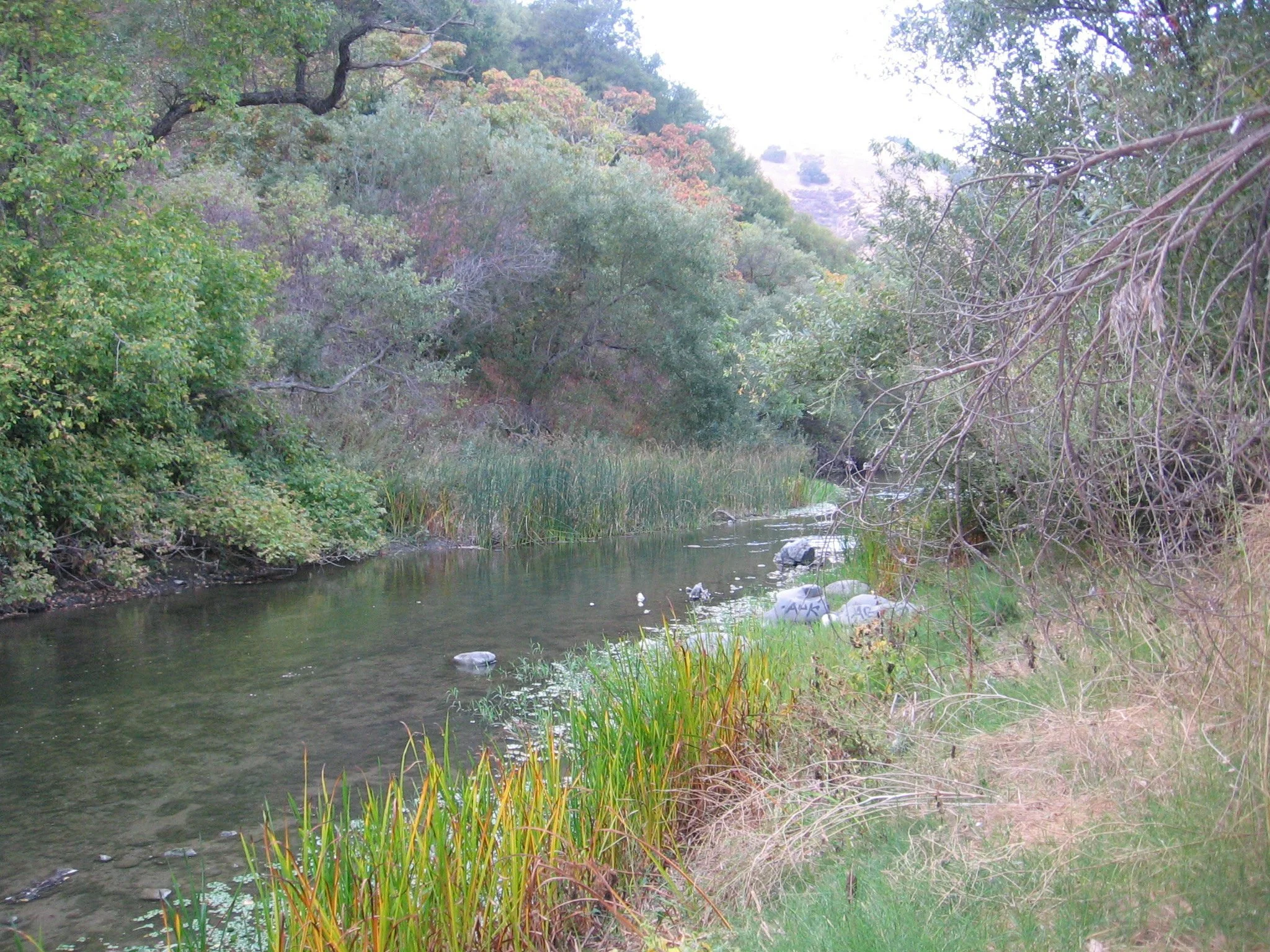
Alameda Creek in Niles Canyon, between Fremont and Sunol. The canyon reach is the gateway to the upper watershed. — Photo: Pedro Xing / Wikimedia Commons, CC0
A River in a Ditch
Alameda Creek rises on Packard Ridge in the Diablo Range east of San José and runs more than 40 miles to Fremont, where its lower 12 miles are confined to a flood-control channel on the way to the Bay. Its watershed spans some 660 square miles, reaching into both Alameda and Santa Clara counties. It is the largest local tributary to San Francisco Bay, and, as NOAA Fisheries put it in a May feature, it “was once the largest producer of steelhead and Chinook salmon in San Francisco Bay.”
The 20th century closed it off. In the 1960s, the U.S. Army Corps of Engineers turned the lower creek into a flood-control channel, and an erosion-control dam at a BART crossing, built in 1972, blocked it further, The Independent reported. Dams, inflatable rubber water-supply dams, road culverts and other structures cut off the rest. According to NOAA, the last time anyone saw a steelhead in the upper creek was 1967.
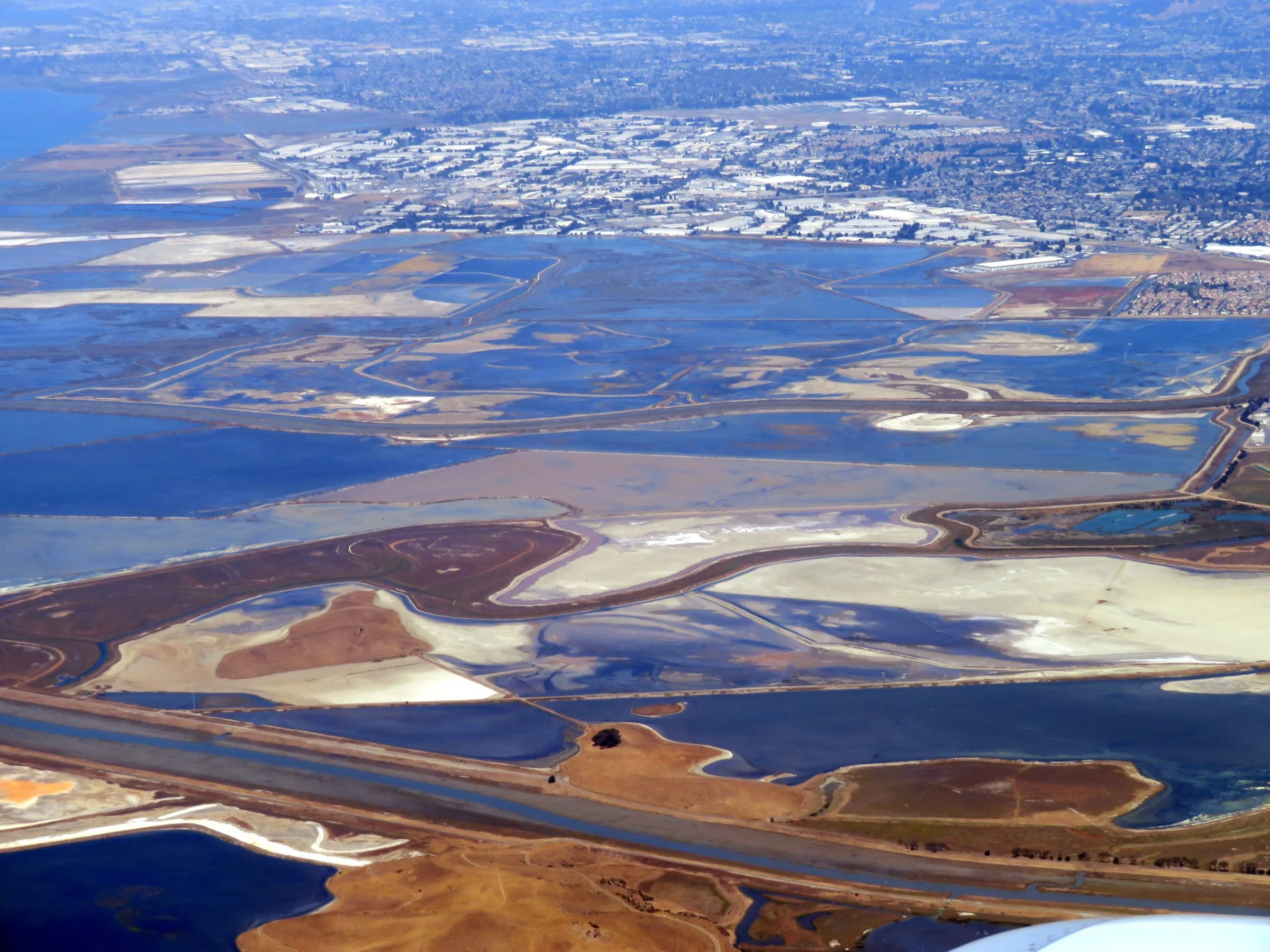
The Alameda Creek delta and surrounding salt ponds from the air, September 2018. — Photo: Pi.1415926535 / Wikimedia Commons, CC BY-SA 3.0
The loss was regional. In the early 1960s, nearly 100,000 steelhead were estimated to spawn in Central Coast and Bay Area streams from the Russian River down to the San Lorenzo River in Santa Cruz County, according to the summit’s organizers. Most Bay Area watersheds now support fewer than a few hundred adult spawners a year. In 1997, Central California Coast steelhead were listed as threatened under the Endangered Species Act.
People of the Creek
Long before any of this, the creek fed people. Alameda Creek is “the ancestral lands of the Muwekma Ohlone people, who depended upon the creek for water, food, shelter,” California Trout wrote when it took on the Sunol project, adding that “the watershed was the site of numerous permanent settlements.”
The written record starts with outsiders. In the spring of 1772, a Spanish party under Pedro Fages crossed the Fremont Plain, the land of the Alson and Tuibun local tribes, and Fages wrote of passing five villages, “each of them having close to six houses of spherical shape.” The historian Randall Milliken placed the Tuibun “at the mouth of Alameda Creek and in the Coyote Hills area,” and wrote that the Taunan “held mountainous reaches of Alameda Creek.” Both passages appear in a history of the Sunol and Pleasanton region written by Muwekma Ohlone leaders and scholars. The Tribe’s own accounts say its ancestors “hunted, fished, harvested marine resources as well and hundreds of plants.”
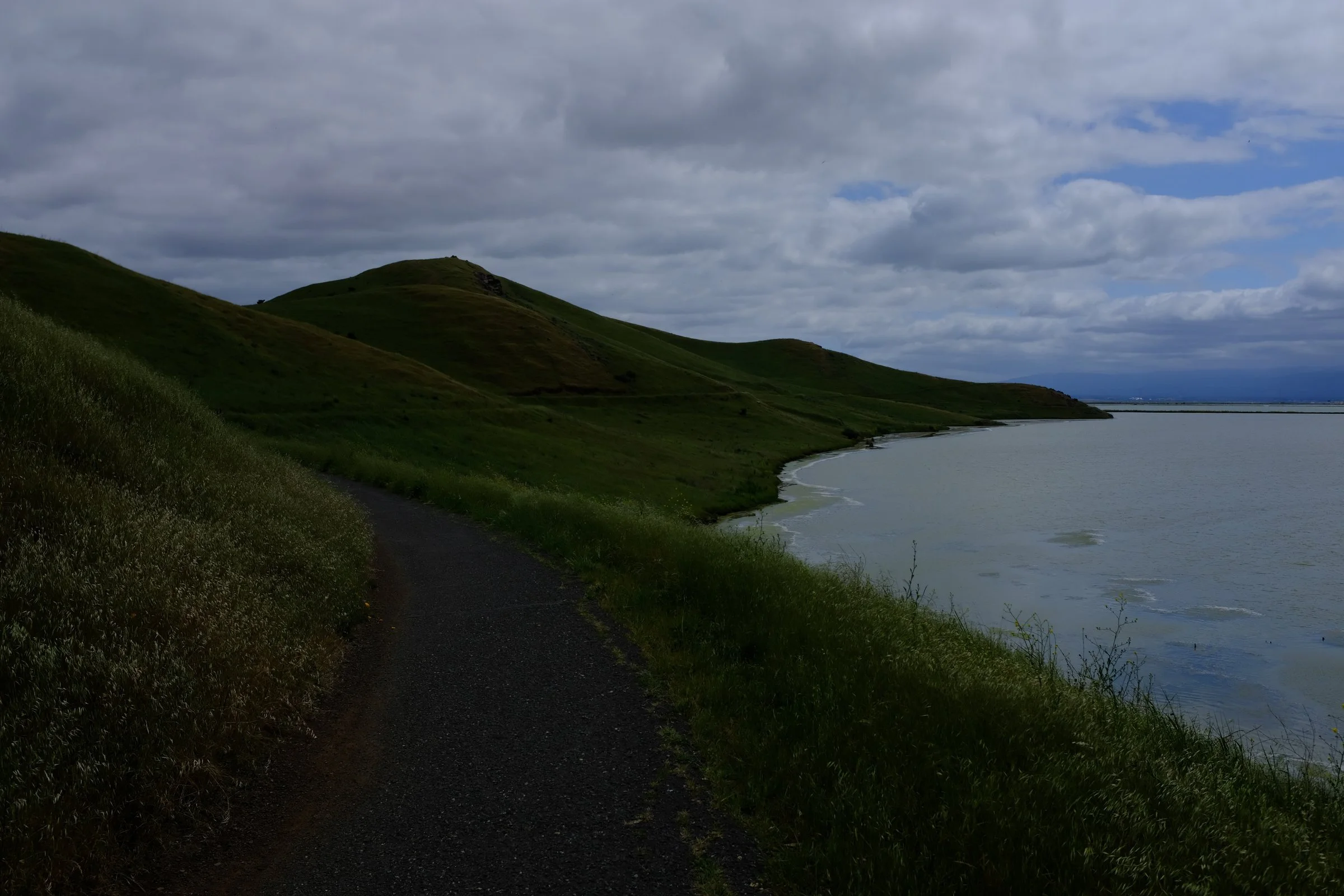
Spring at Coyote Hills Regional Park in Fremont. The historian Randall Milliken placed the Tuibun tribe in the Coyote Hills and at the mouth of Alameda Creek. — Photo: Poshotenk / Wikimedia Commons, CC BY-SA 4.0
The missions broke that world apart, but the Tribe’s families did not leave the watershed. Before and after the American conquest of California, the Tribe’s history says, Muwekma families gathered in refuge communities on Californio rancho lands. Among them were the Alisal Rancheria near Pleasanton, a rancheria at Sunol, El Molino (“The Mill”) at Niles and Del Mocho in Livermore, all within the Alameda Creek watershed. The same history calls Alisal “one of the first known post-American conquest Indian revitalization centers within the Bay Area.” Its families were part of the Verona Band of Alameda County, which the federal government once recognized and from which today’s enrolled Muwekma lineages descend.
“Our People have inhabited the greater Sunol/Pleasanton/Livermore/Niles region for thousands of years,” Monica V. Arellano, then vice chairwoman of the Muwekma Ohlone Tribal Council, said in 2020. She was speaking about the Tribe’s work with the San Francisco Public Utilities Commission on a new watershed center in Sunol, a project this story returns to below.
Twenty-Eight Years
In 1997, Jeff Miller, an environmentalist who grew up in the East Bay, talked his housemate, a student pilot, into flying him over the watershed. “Once I saw how big the watershed was and how untouched the upper river was, I was kind of hooked,” Miller told NOAA Fisheries. “I said, ‘I’m going to work on restoring it. We’ll get steelhead back. Should only take a couple of years.’” It took 28.
Miller founded the Alameda Creek Alliance that year. In 1999 he helped form the Alameda Creek Fisheries Restoration Workgroup, which brought water agencies, regulators, nonprofits and fishing groups to the same table. They took the barriers on one at a time. In 2006, the SFPUC removed the 165-year-old Niles Dam and the 20-foot Sunol Dam from Niles Canyon. By the Alliance’s count, the Sunol Dam was the largest dam ever removed in the Bay Area for fish restoration. In 2018, the SFPUC finished rebuilding Calaveras Dam in the upper watershed. The new reservoir releases cold water in summer for trout downstream, and the agency added a fish ladder at its Alameda Creek Diversion Dam.
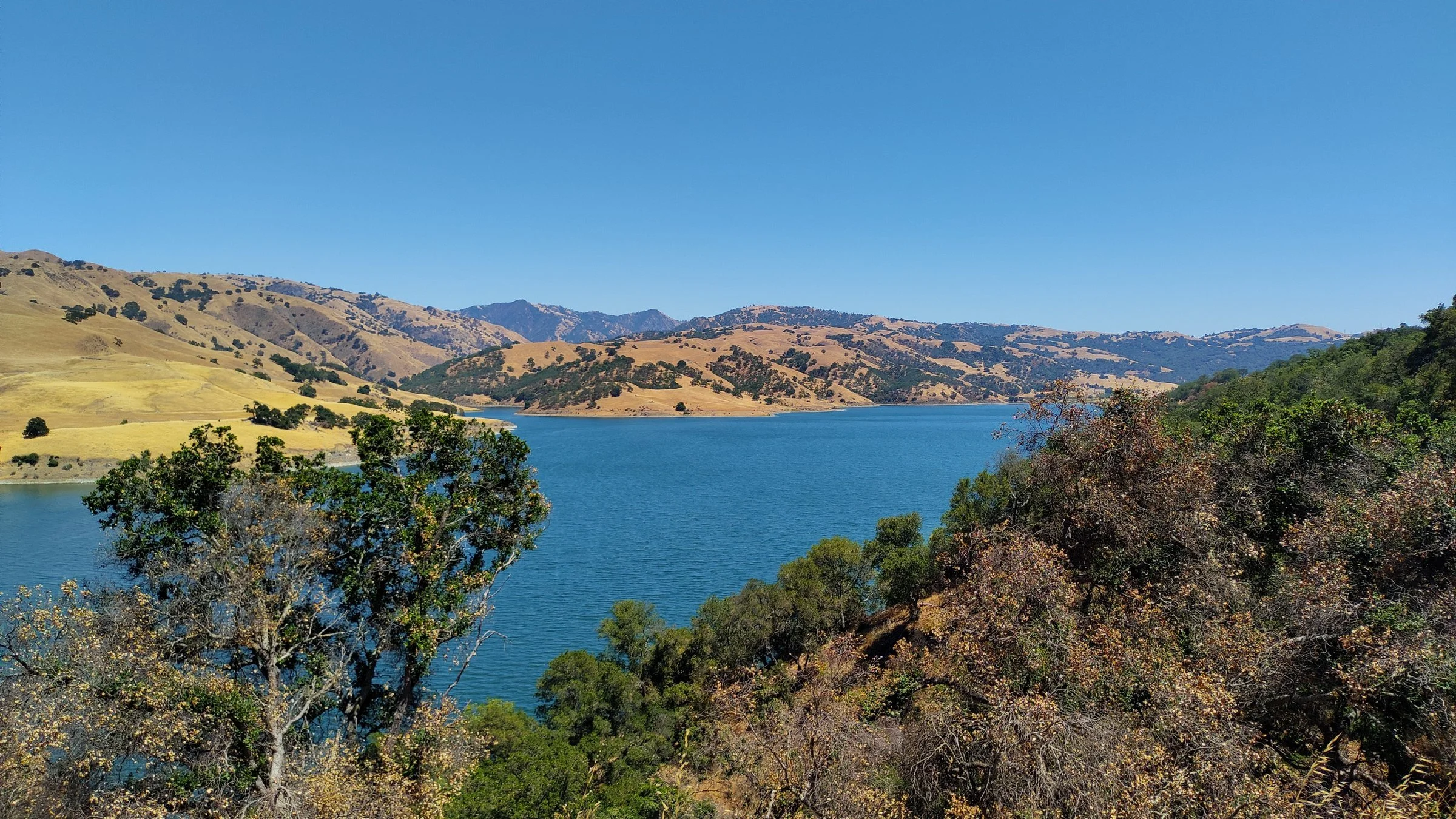
Calaveras Reservoir, the largest of the SFPUC’s local reservoirs, June 2021. Since the dam was rebuilt in 2018, it has released cold water in summer for trout downstream. — Photo: Ludwig von Ruhm / Wikimedia Commons, CC BY-SA 4.0
In Fremont, the Alameda County Water District built a fish ladder around the BART weir, a 12-foot cement drop, which it completed in 2022, three years after a second ladder at a rubber dam a mile upstream. By 2022 the district had spent $80 million on fish passage. The creek supplies roughly 40 percent of the water the district serves to 357,000 people in Fremont, Newark and Union City.
The salmon showed up almost at once. On Dec. 5, 2022, nearly a dozen were seen below the new ladder. Three days later, a family of river otters that had recently turned up at Quarry Lakes, next to the creek, was photographed feasting on one of the big Chinook. Fur trappers had wiped out river otters in the Bay Area by the 1930s, the Alliance noted.
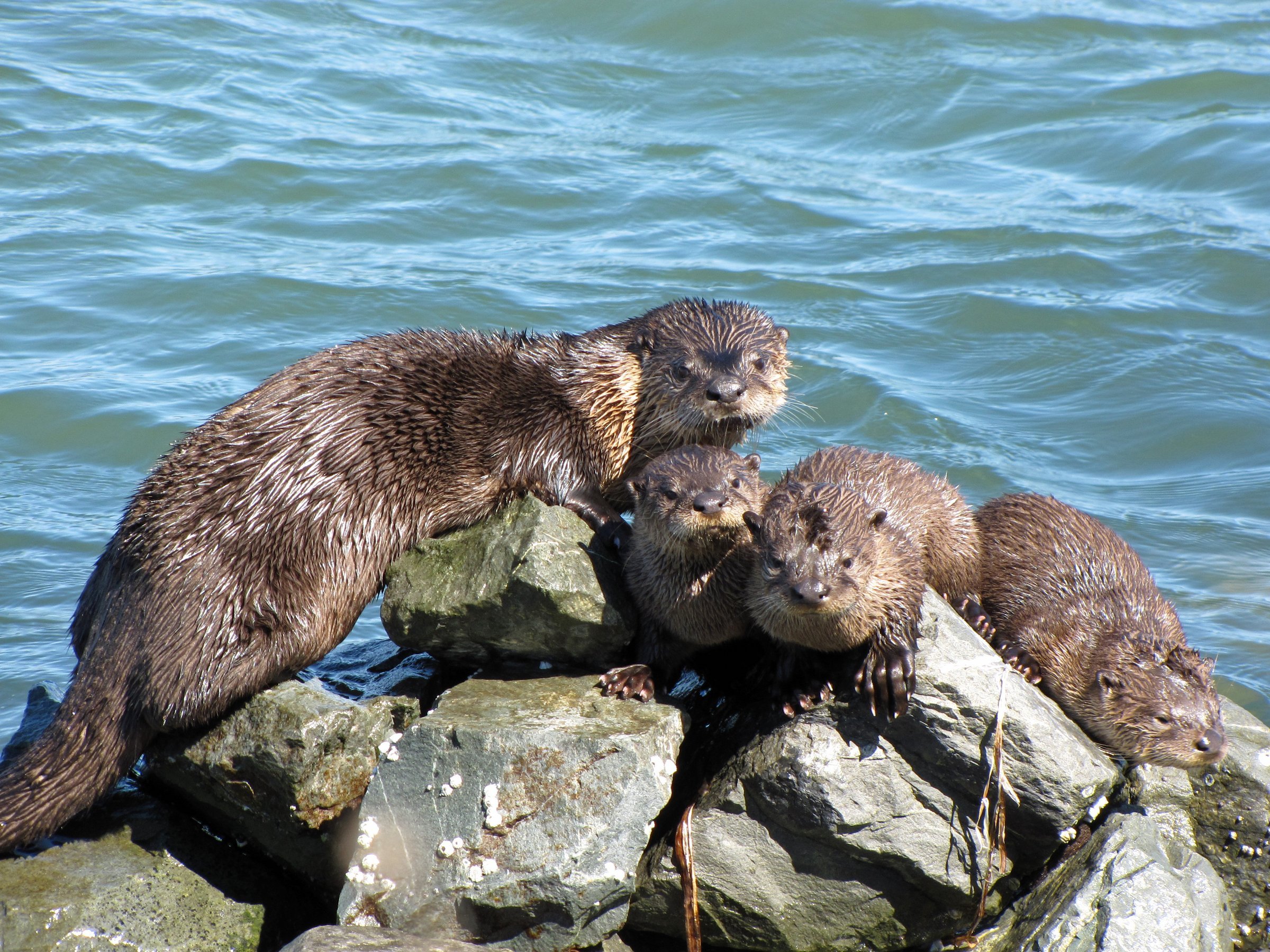
River otters at the Richmond Marina on San Francisco Bay. Otters returned to the East Bay in 2013 after being trapped out of the region decades earlier. — Photo: Scott Campbell / Wikimedia Commons, CC BY-SA 3.0
That left the pipeline. Construction began in the summer of 2025. Biologists moved fish and frogs out of the way, and the creek was diverted into a pipe. PG&E crews dug a 20-foot-deep trench, moved the pipeline about 100 feet downstream and buried it about 20 feet below the creek bed. Then they regraded about 1,800 feet of channel to replace the 8-foot drop with a gentle natural slope. NOAA’s Office of Habitat Conservation put in $4.3 million. In all, according to NOAA, partners have opened fish passage at 18 barriers along the creek.
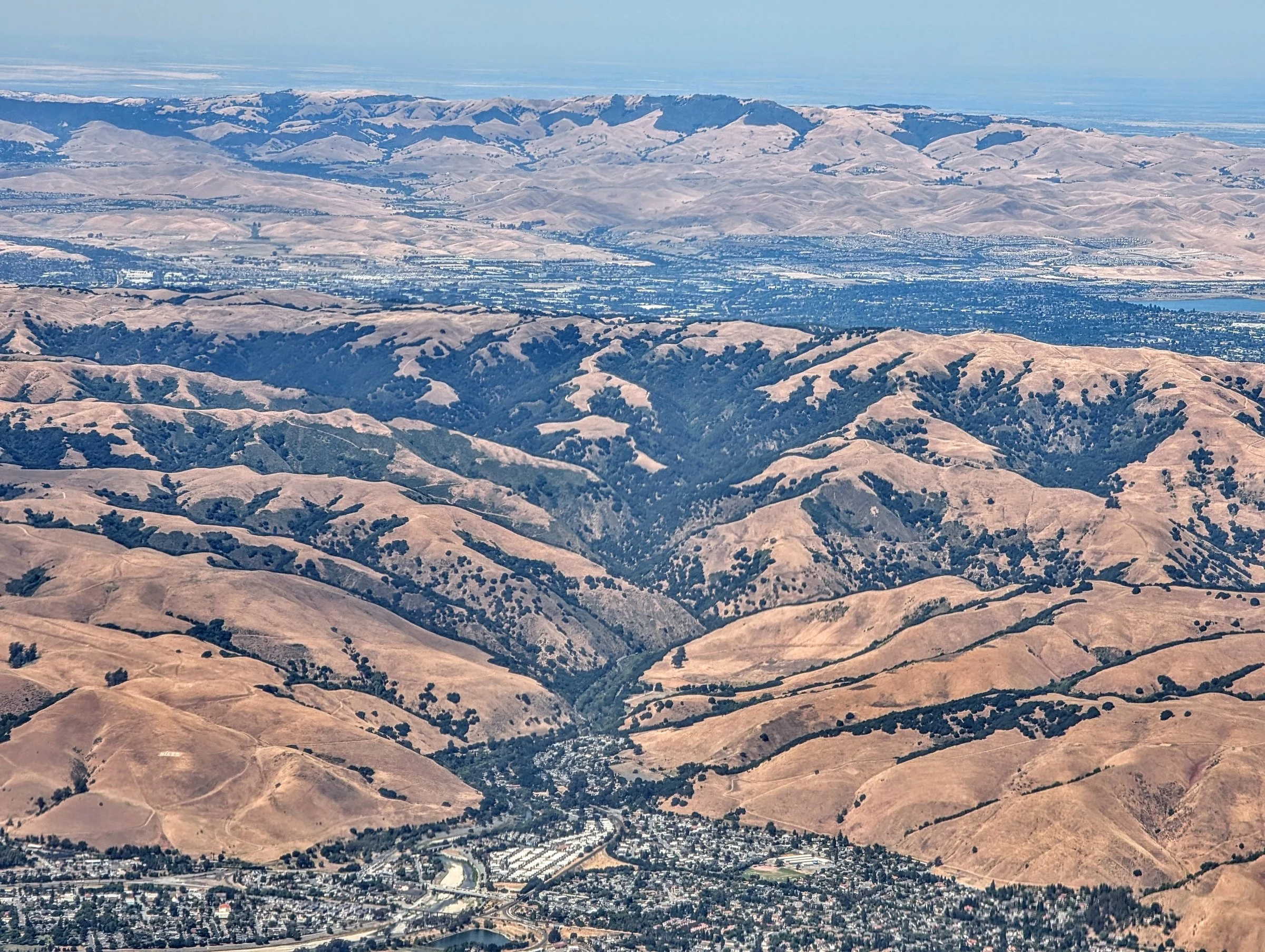
Niles Canyon from the air, with Alameda Creek in the foreground and the Tri-Valley beyond, June 2025. — Photo: Dicklyon / Wikimedia Commons, CC BY-SA 4.0
Strays and Pioneers
The celebration comes with a caveat. The Chinook are almost certainly not Alameda Creek fish. “They haven’t been born in Alameda Creek for over 75 years. What we’re seeing now are hatchery strays,” Sullivan told The Independent. Because hatchery fish are often transplanted into the Bay, the paper explained, they lose their natural homing abilities and follow flushes of fresh water. “They’re just going to whichever stream that attracts them first,” Sullivan said. In 2022 the Alliance said the strays most likely come from Central Valley hatcheries.
The steelhead the effort was built for are harder to count. As of May 2026, an antenna California Trout installed just upstream of the old pipeline had not detected a single tagged adult steelhead. NOAA noted that steelhead travel mostly at night and that untagged fish go unrecorded. But in February, an Alameda County Water District employee photographed a male and a female steelhead using a fish ladder in the lower creek. They were the first adult steelhead documented moving upstream on their own past those barriers in decades.
“When that photo came out, everyone in the restoration community was thrilled—there had been so many years without steelhead,” said Alison Weber-Stover, a NOAA Fisheries ecologist. “The potential for steelhead to return to the watershed is far greater than in other areas of San Francisco Bay.”
“The potential for steelhead to return to the watershed is far greater than in other areas of San Francisco Bay.” —Alison Weber-Stover, ecologist, NOAA Fisheries
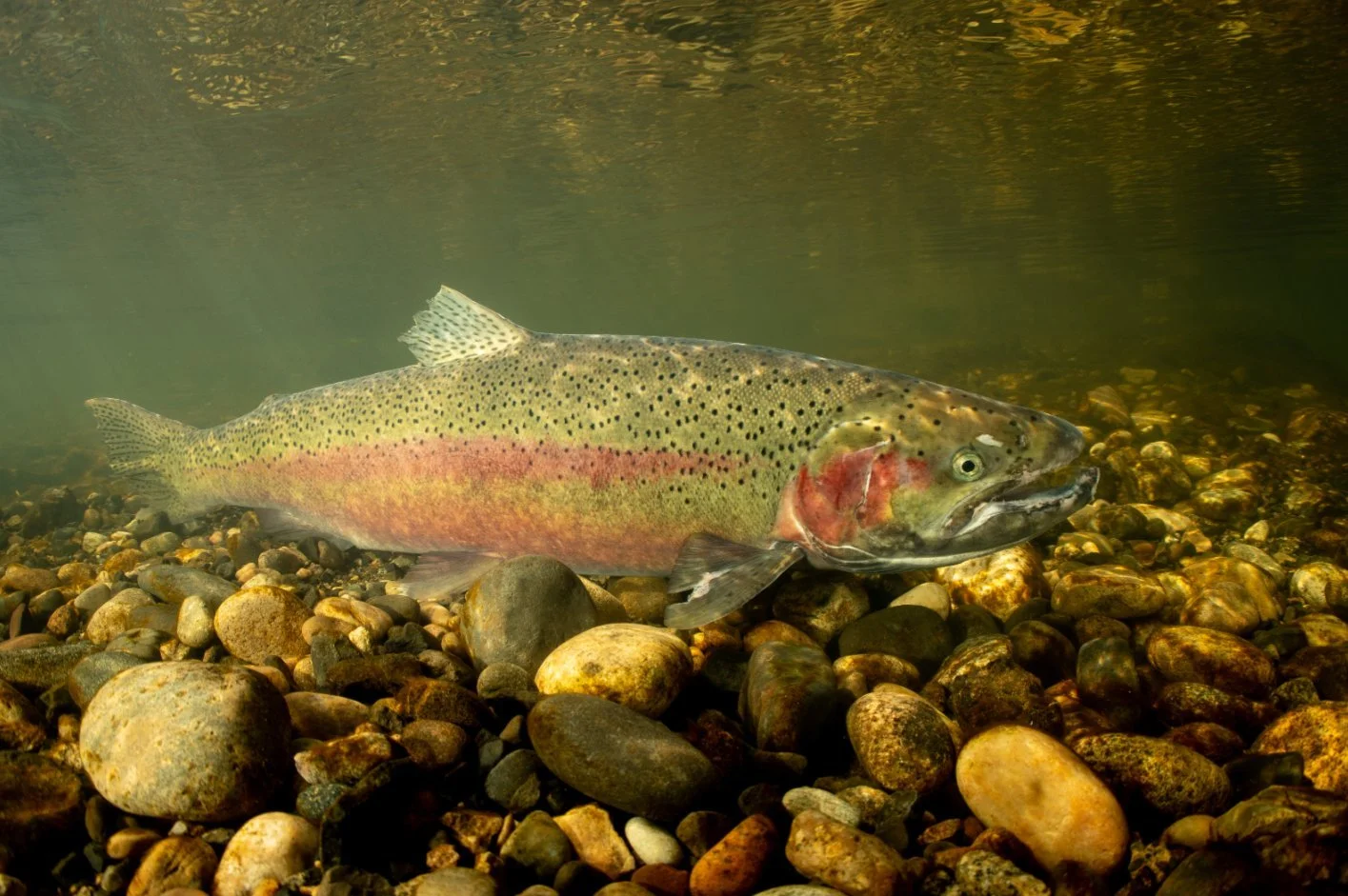
A steelhead trout. Steelhead are the ocean-going form of rainbow trout; unlike salmon, they do not necessarily die after spawning. — Photo: Ryan Hagerty / U.S. Fish and Wildlife Service (public domain)
Part of the hope rests on fish that never left. Resident rainbow trout survived in the upper watershed, and scientists at NOAA’s Southwest Fisheries Science Center in Santa Cruz found that some still carry genetic traits associated with migration. During the 2025 trapping season, SFPUC biologists captured 1,199 O. mykiss, the species that includes both rainbow trout and steelhead, in upper Alameda Creek and tagged 592 of them. Downstream, the water district’s monitors detected 24 tagged O. mykiss at its fish passage facilities in 2024–25.
“Salmon and steelhead (trout) are ecosystem indicators,” Buchanan told The Independent. “When you have salmon and steelhead that are healthy and reproducing, you know that you have cool, clean water.” Her team has already seen tiger salamanders and northwestern pond turtles at the project site. Across the hills in San José, Valley Water’s underwater camera recorded adult steelhead migrating up the Guadalupe River, which the Tribe calls Thámien Rúmmeytak, in January and February of this year.
Warm Water, Cold Politics
The fish that make it upstream will meet a warming state. California Trout says that if current trends hold, 45 percent of California’s salmon, steelhead and trout species are likely to be extinct within 50 years. Its last statewide assessment, in 2017, rated climate change a critical or high threat to 27 of 31 species.
In February, the U.S. Environmental Protection Agency rescinded its 2009 finding that greenhouse gases endanger public health and welfare, and repealed the federal greenhouse gas standards for cars and trucks that rested on it. The agency concluded that the Clean Air Act does not authorize it to regulate greenhouse gases in response to climate change. California Trout said the decision “departs from decades of scientific consensus” and weakens “a key legal foundation for addressing greenhouse gas emissions.” “Eliminating the endangerment finding is bad policy,” said Redgie Collins, the group’s vice president of legal and government affairs. Darren Mierau, its director of science, said that “warming temperatures, altered hydrology, and declining snowpack are already reshaping California’s rivers and with them our native wild fish.”
“Warming temperatures, altered hydrology, and declining snowpack are already reshaping California’s rivers.” —Darren Mierau, director of science, California Trout
The summit’s organizers put the regional stakes bluntly. Bay Area steelhead, they wrote, “face extinction in the next century without significant investments in monitoring, habitat restoration, and increased efficiency in water use and management.” More than 90 percent of the Bay’s wetland and estuarine habitat, where young fish grow, has been drained or filled, they noted. The summit will also preview California Trout’s new State of the Salmonids assessment, due in early 2027, and hear how steelhead might use tidal marsh restored by the South Bay Salt Pond Restoration Project.
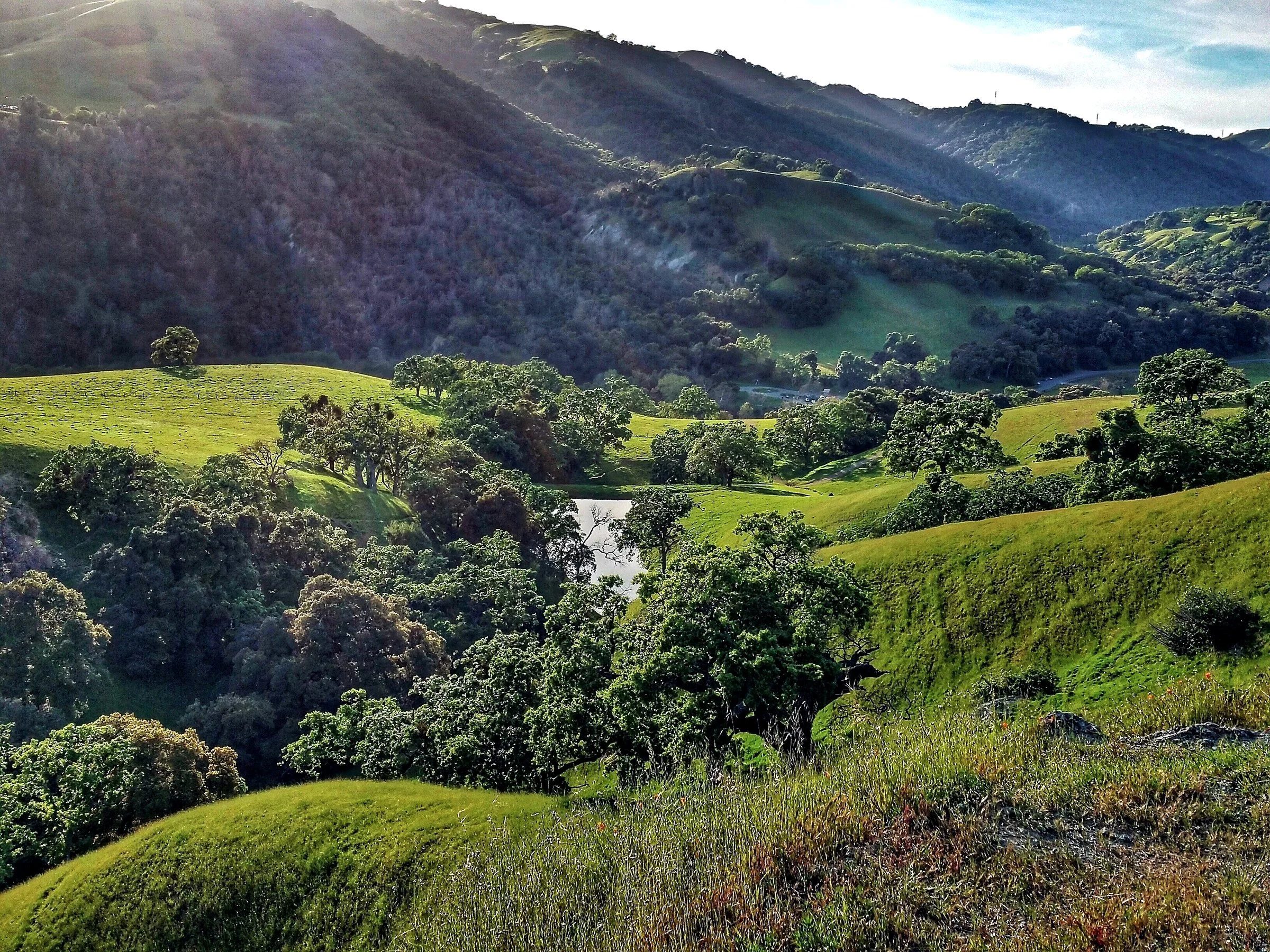
Sunol Regional Wilderness from the Canyon View Trail, March 2016. NOAA describes the wilderness as high-quality spawning habitat for returning steelhead. — Photo: Calmuziclover / Wikimedia Commons, CC BY 2.0
What the fish are swimming toward is worth the trip. “The Sunol Regional Wilderness has everything migratory fish are looking for,” Buchanan told NOAA. “There’s incredible cobble and gravel for spawning, tree canopy for shade, and constant cool, clean water.”
The Eagle at Sunol
In Sunol, beside the Beaux Arts pergola of the 1910 Sunol Water Temple, the SFPUC has been building the Alameda Creek Watershed Center. The agency planned it with Sunol residents and the Muwekma Ohlone Tribe, and its exhibits are meant to teach the history and heritage of the Muwekma Ohlone people alongside the ecology of the creek. At its garden entrance will stand Rúupaywa, a sculpture by the MacArthur Fellow Walter Kitundu, named for the Chochenyo word for “the eagle.” It takes the form of a golden eagle, a significant figure in the Muwekma Ohlone creation story. Under the plans announced in 2020, a sound installation in the gardens will be composed entirely from the voices of Tribe members, translated into the songs and calls of the watershed, and offered to the Tribe as a repository of language.
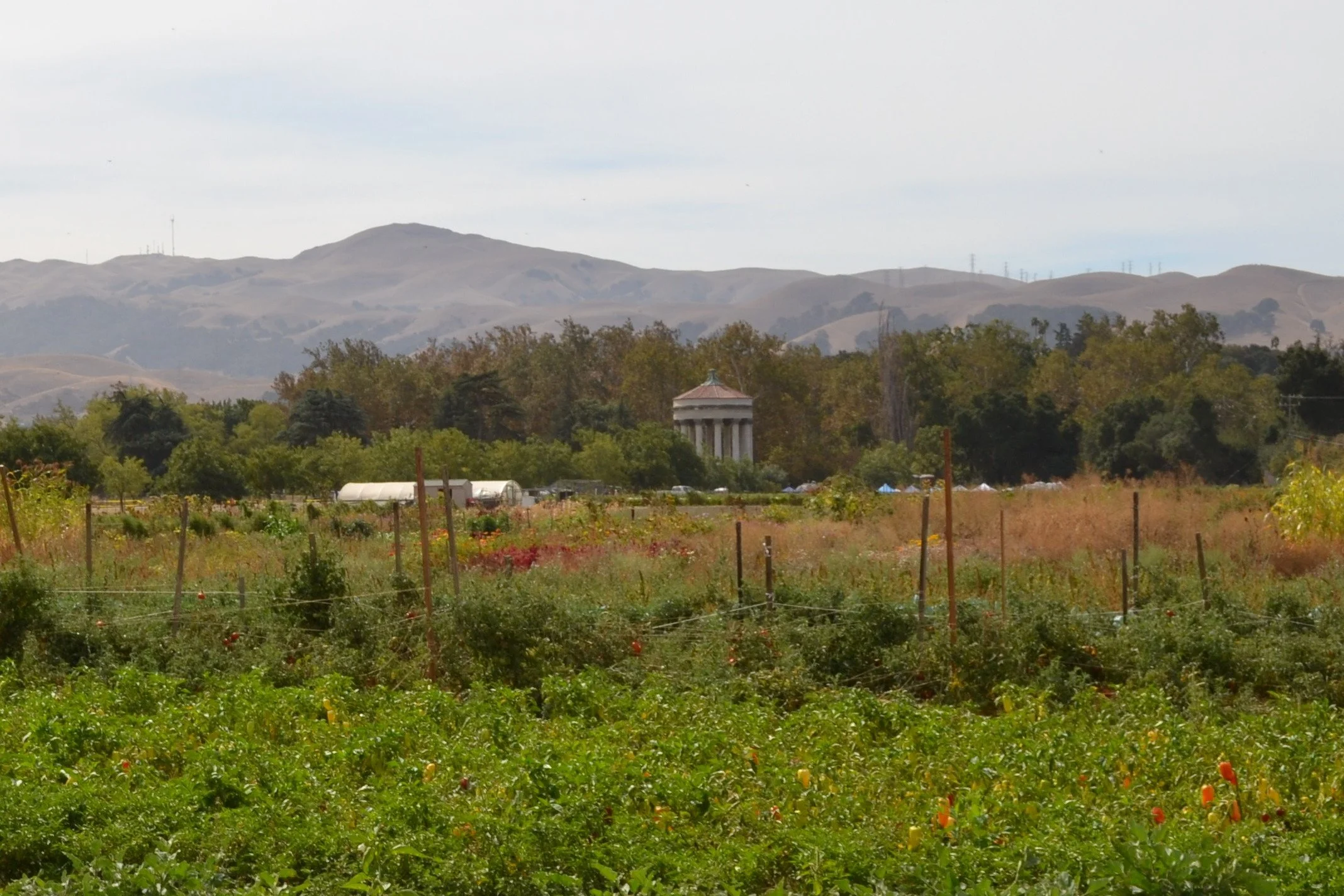
The Sunol Water Temple, completed in 1910, where the SFPUC’s Alameda Creek Watershed Center is being built next door. — Photo: Oleg Alexandrov / Wikimedia Commons, CC BY-SA 4.0
The center has been a long time coming. In March, The Mercury News reported that planning had begun more than 17 years earlier, and an SFPUC manager told the paper the project was “over 95% complete.” The agency’s website still lists no opening date.
For the Tribe, the fish and the land are one subject. The Muwekma Ohlone Preservation Foundation’s Land Acquisition Committee names salmon, beaver and tule elk among the culturally significant species it hopes to help recover on lands held for the Tribe. “Wildlife protection and habitat restoration are inseparable from Muwekma cultural survival,” the committee writes. The return of those species, it says, “signals the healing of the land.”
“Wildlife protection and habitat restoration are inseparable from Muwekma cultural survival.” —Land Acquisition Committee, Muwekma Ohlone Preservation Foundation
What Comes Back
The work on Alameda Creek is not finished. According to NOAA, Miller and his partners are working on projects to improve fish survival through the flood-control channel, to restore tidal habitat at the creek’s mouth, and to begin a pilot project returning beavers to the creek.
In the meantime, the creek needs eyes. The Alliance asks anyone who sees what might be a salmon or steelhead in Alameda Creek between November and April to report it. Chinook may turn up in the flood-control channel and upstream in late November and early December after heavy rains. Adult steelhead are typically seen from January through early March.
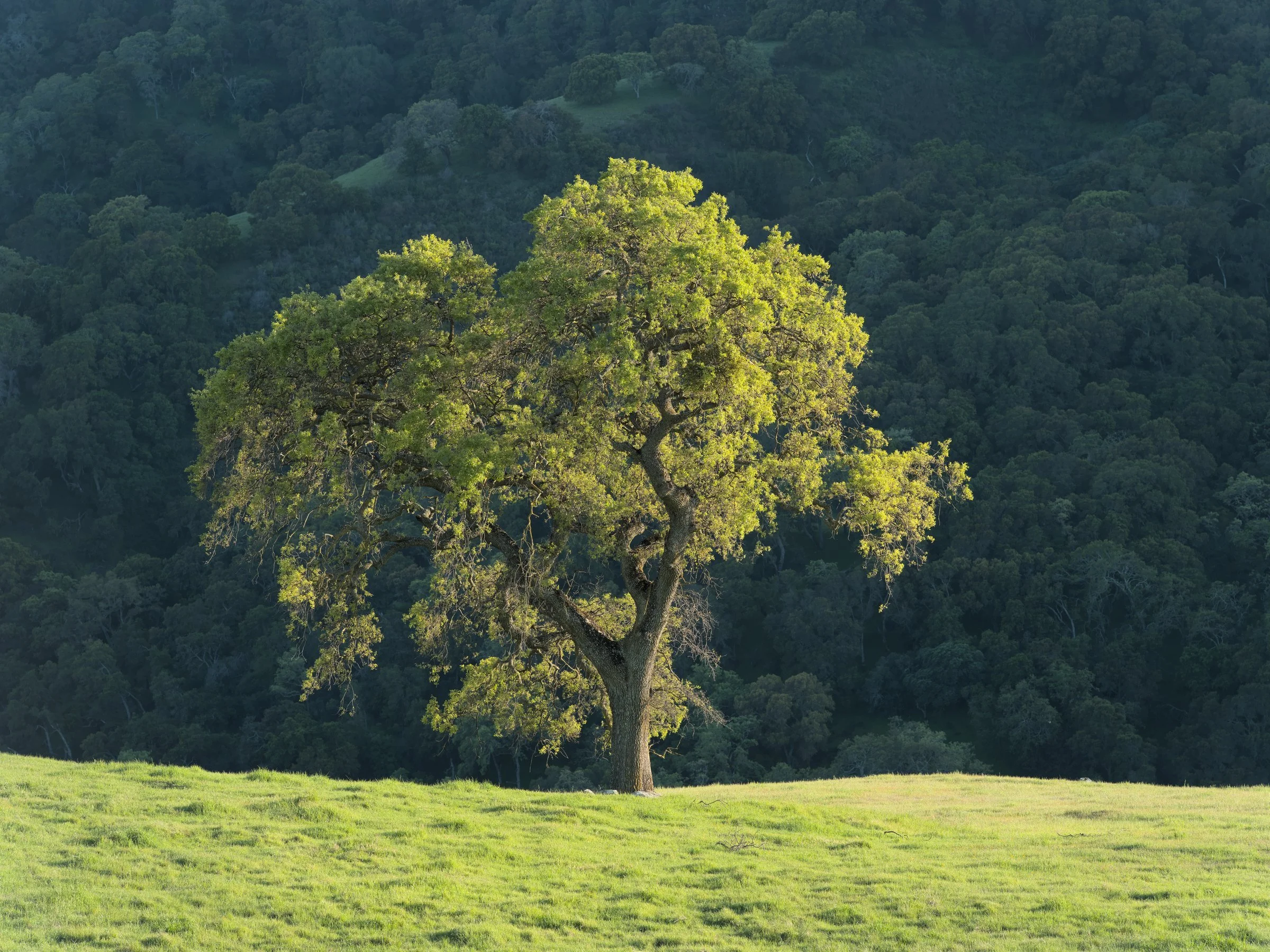
A solitary oak in Sunol Regional Wilderness, April 2023. — Photo: Daniel Lu / Wikimedia Commons, CC BY-SA 4.0
Miller is still watching the upper watershed. “I think the first time I actually find a spawning steelhead up there,” he told NOAA, “I’ll probably fall down and start crying.”
The fish keep their own calendar. When the first big storm of the season comes, the water will rise in Niles Canyon, and whatever fish are waiting in the Bay will sense the fresh water, as Sullivan put it. The creek is open now, all the way to Sunol.
Editor’s note: Charlene Nijmeh, president of the Muwekma Ohlone Preservation Foundation, which publishes this newsletter, is a co-author of the history of the Sunol and Pleasanton region cited in this article. The Land Acquisition Committee quoted here is part of the Foundation. All quotations in this article come from previously published sources, listed in the accompanying source notes.